Dozy
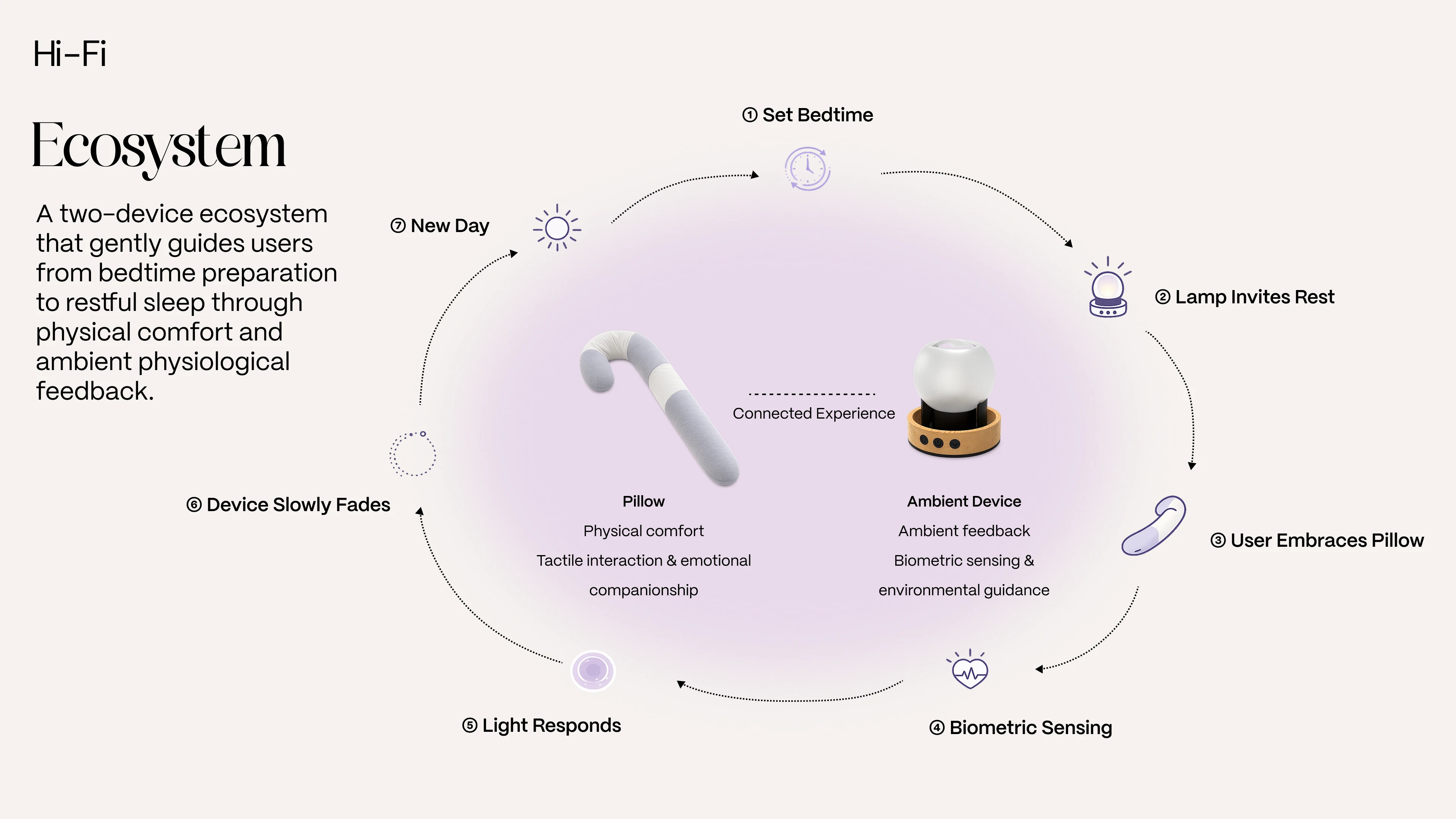
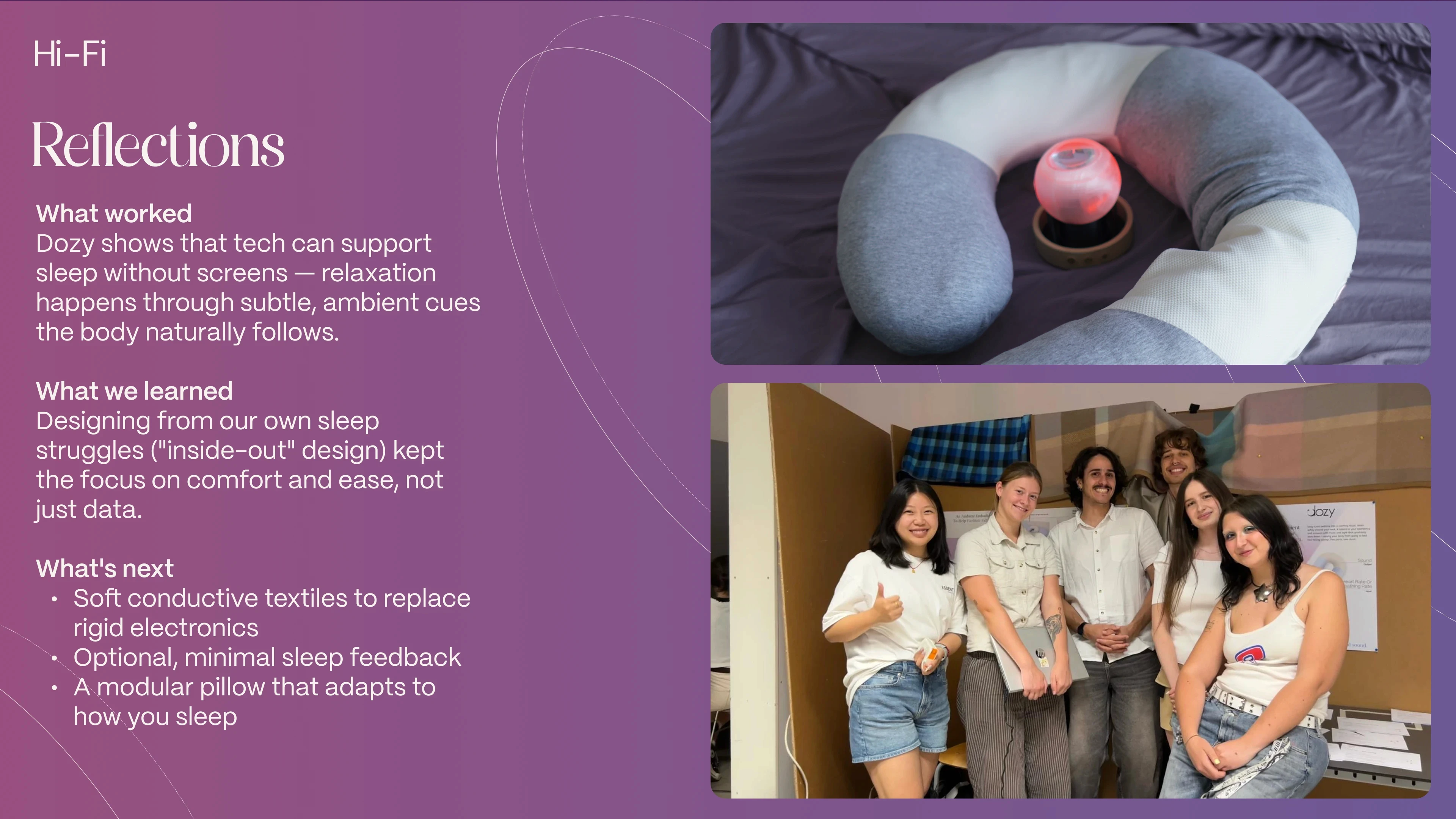
Dozy is a screenless, two-part biofeedback ecosystem designed to combat bedtime procrastination and reduce nighttime anxiety in young adults. By pairing a tactile, multi-density companion pillow with an ambient light and sound projector, the system captures biometric cues and subtly guides users into sleep through gentle sensory entrainment. The project replaces screen reliance and mobile app interactions with a purely physical, intuitive experience—combining soft ergonomics, tangible UX, and physical computing to create a seamless pre-sleep transition ritual.
Year
2026
Client
Politecnico di Milano
Scope
Embodied Interaction, Sleep Tech, IoT Ecosystem, Physical Computing, Tangible UX, Speculative & Biofeedback Design, Screenless UX
Impact
Reduced bedtime procrastination and nighttime anxiety by transitioning young adults into sleep via an ambient, screenless two-device biofeedback ecosystem.
Role
Product Designer & UX Researcher
Personal Contributions
User Testing, UX Research, Prototyping, Communication Design
The Challenge
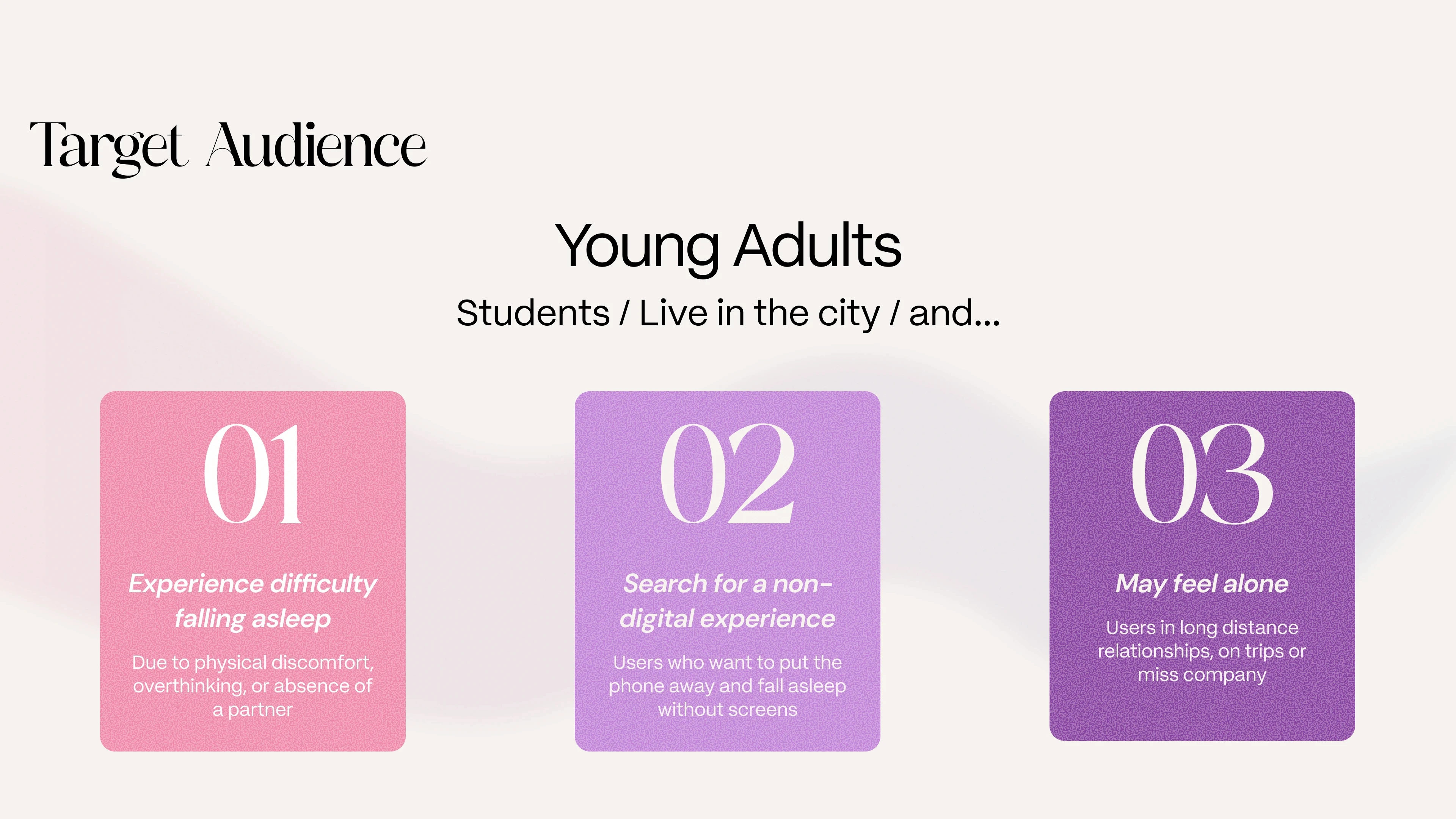
Overcoming shuteye latency, overthinking, and bedtime procrastination in young adults seeking digital detox, without relying on intrusive screens or complex app interactions.
The Solution
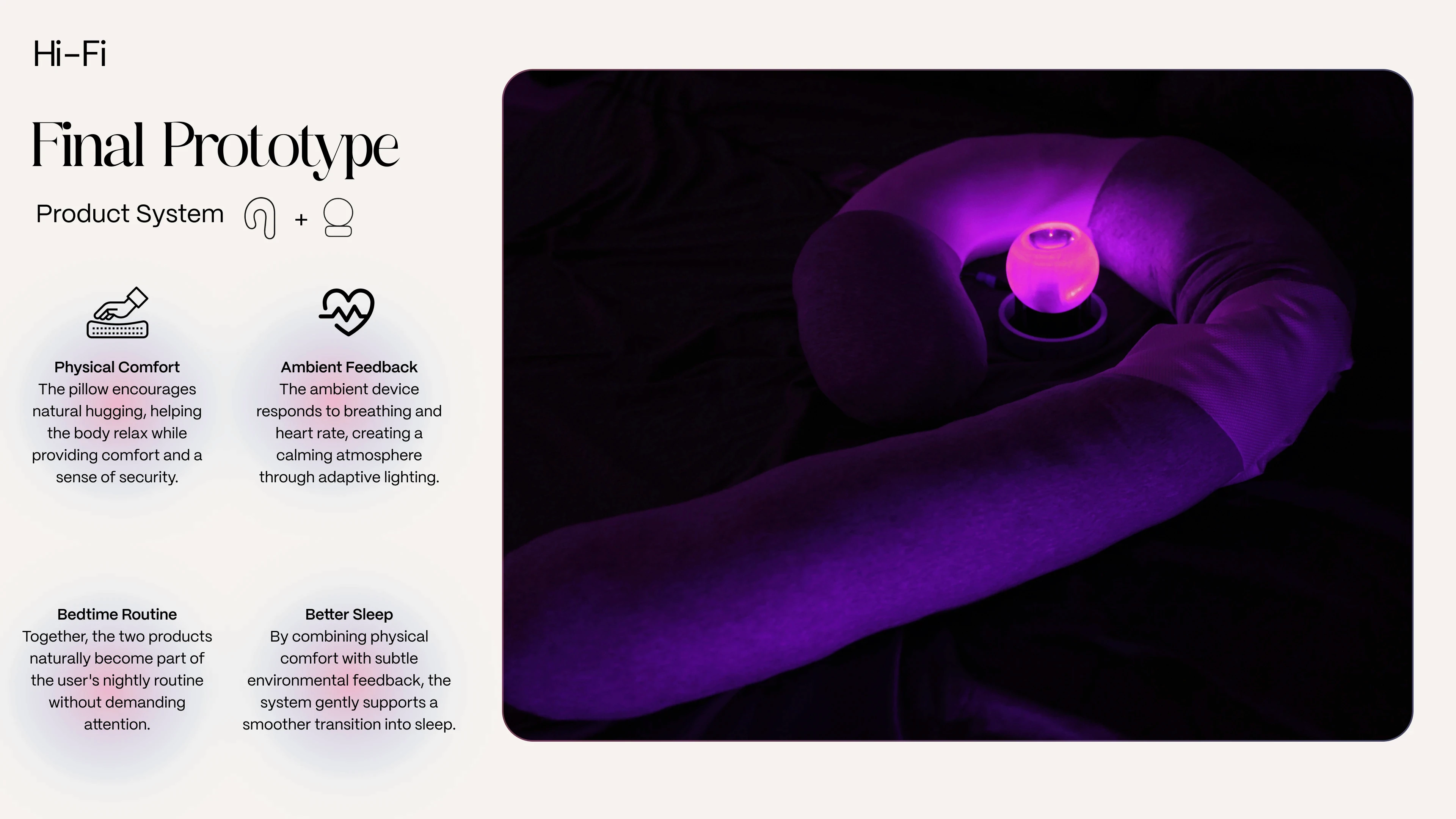
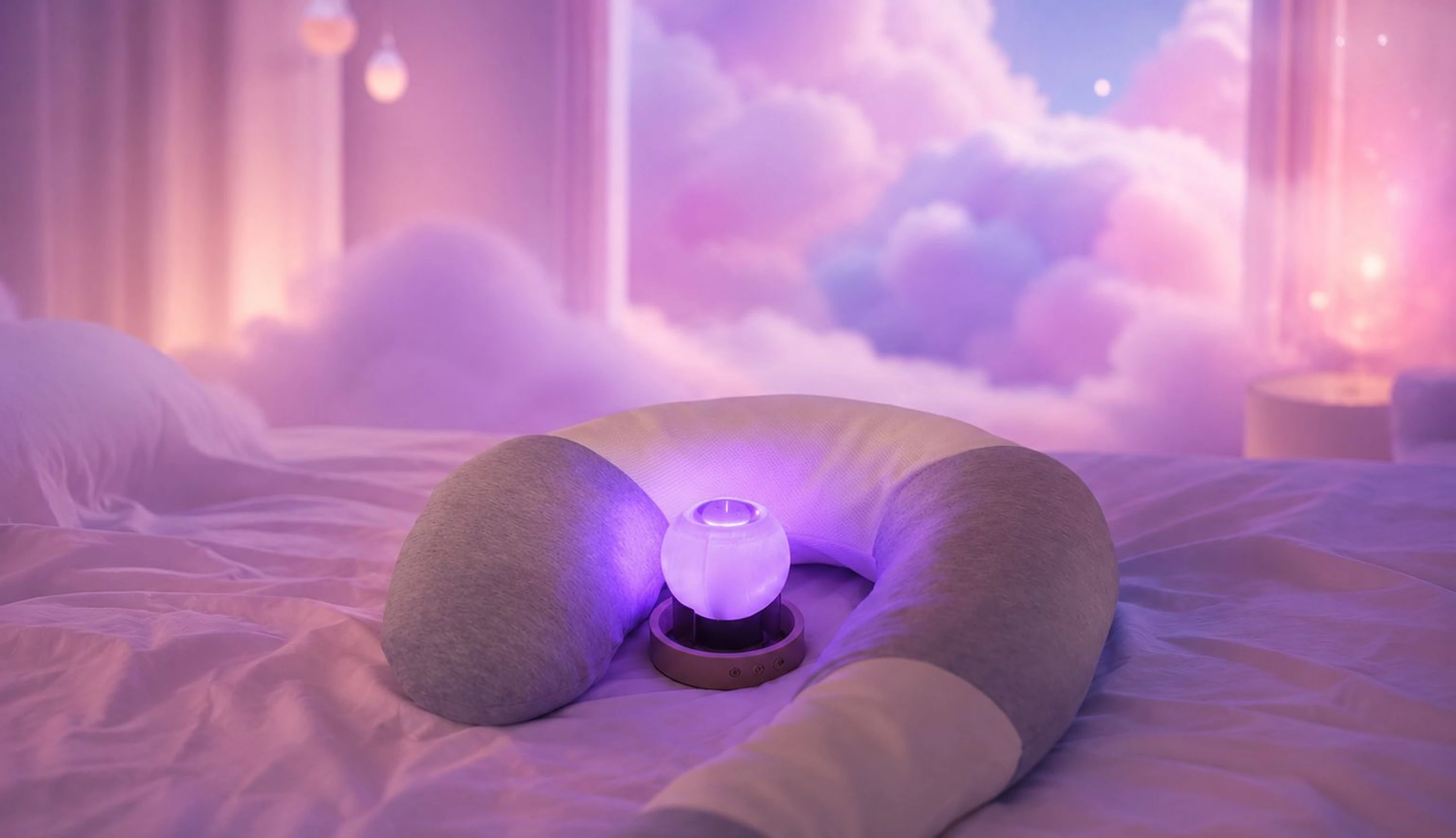
"Dozy"—a screenless, two-device ecosystem combining a tactile, multi-density companion pillow with an ambient biofeedback lamp that mirrors heart rate and breathing through dynamic light and sound.
3 Big Takeaways
Subtle over Explicit: Users prefer passive, subconscious entrainment (e.g., light and audio slowing down to guide breathing) over forced or explicit instructions.
Comfort Trumps Technology: In bedtime physical computing, soft ergonomics, fabric choices, and unobtrusive forms matter far more than complex visual tech.
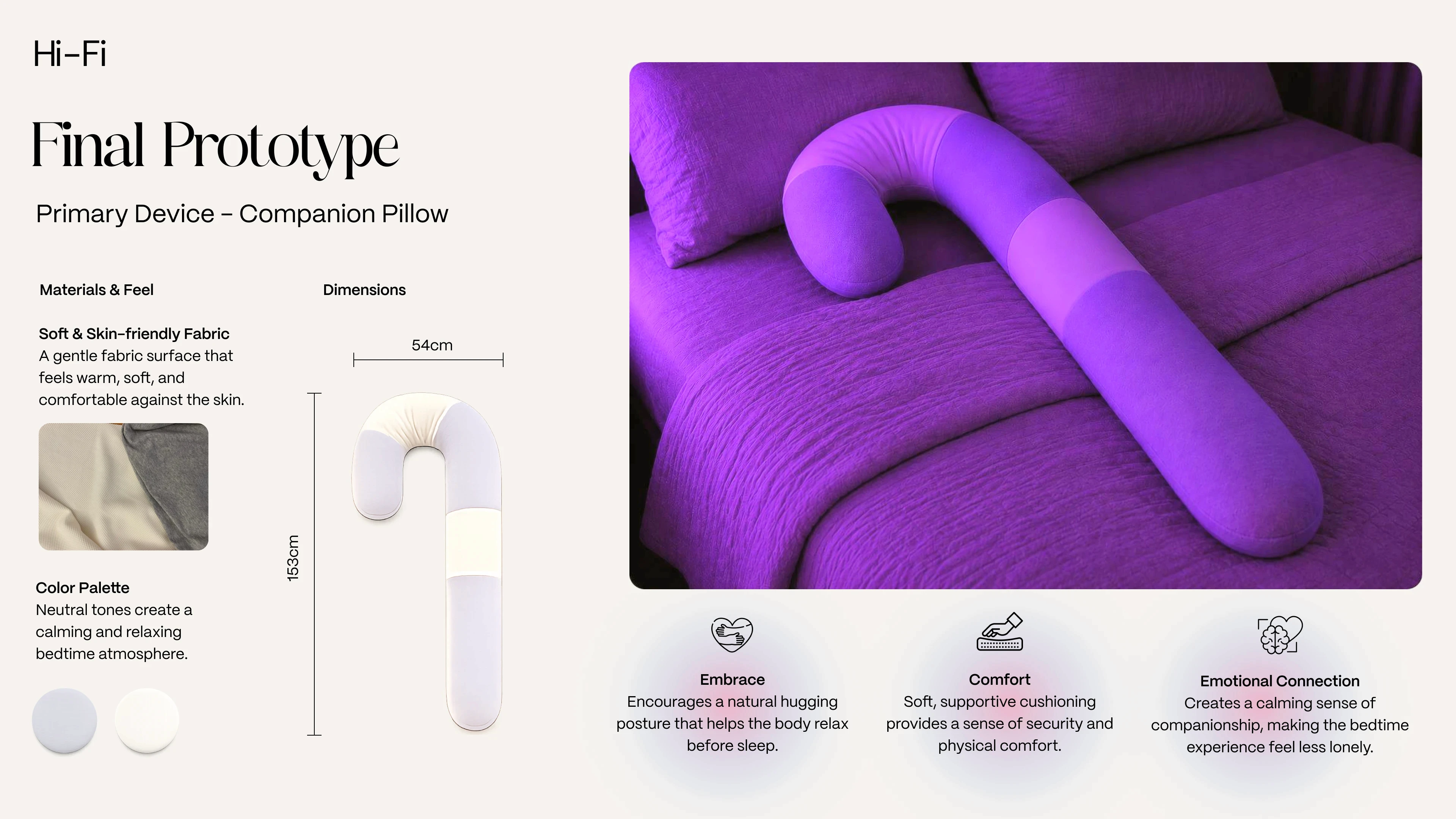
Decoupling Sensing from Feedback: Separating the physical huggable pillow (sensing/comfort) from the light projector (ambient environment) solved ergonomic issues caused by integrated hardware.
Key Research Insights
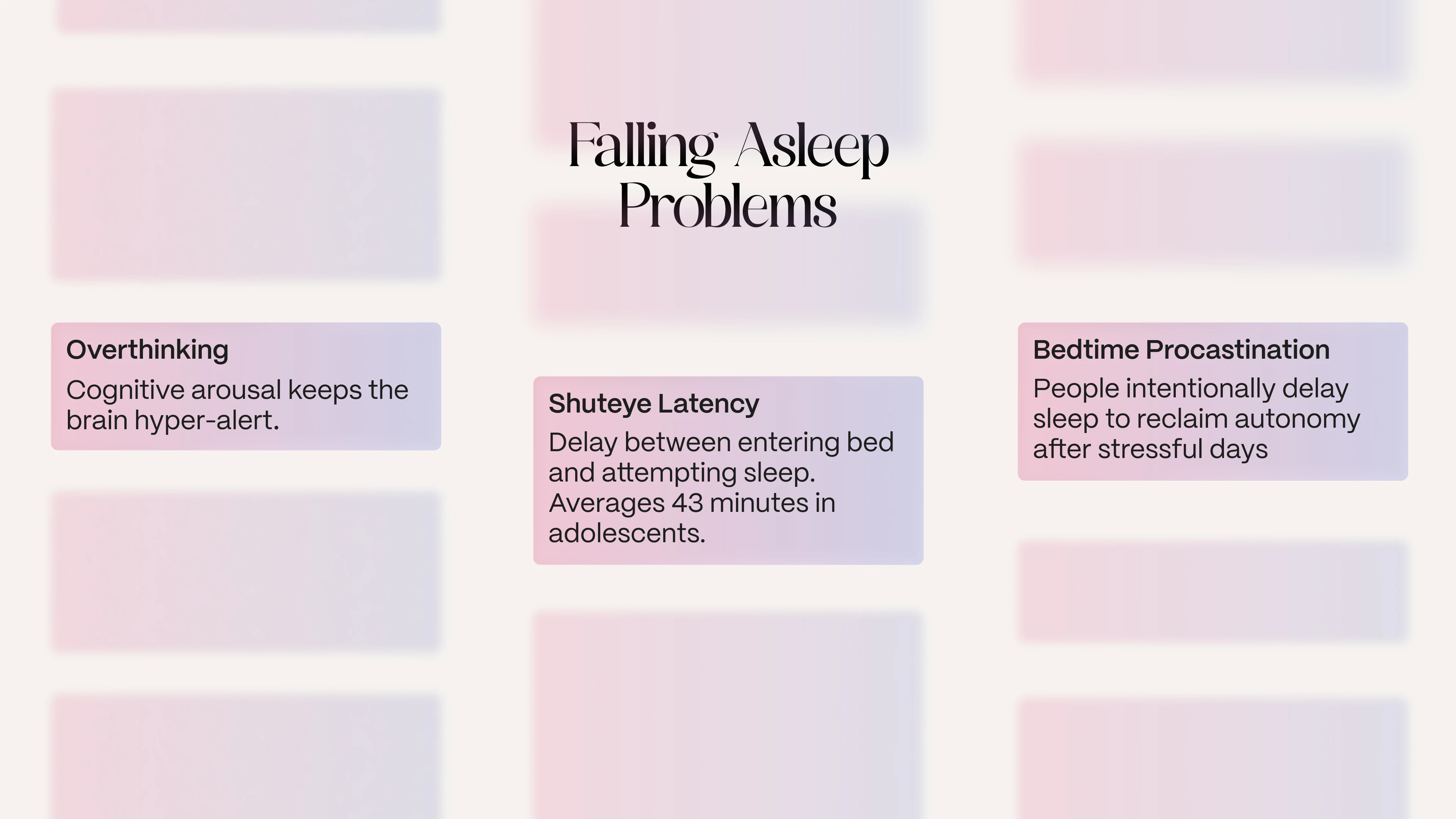
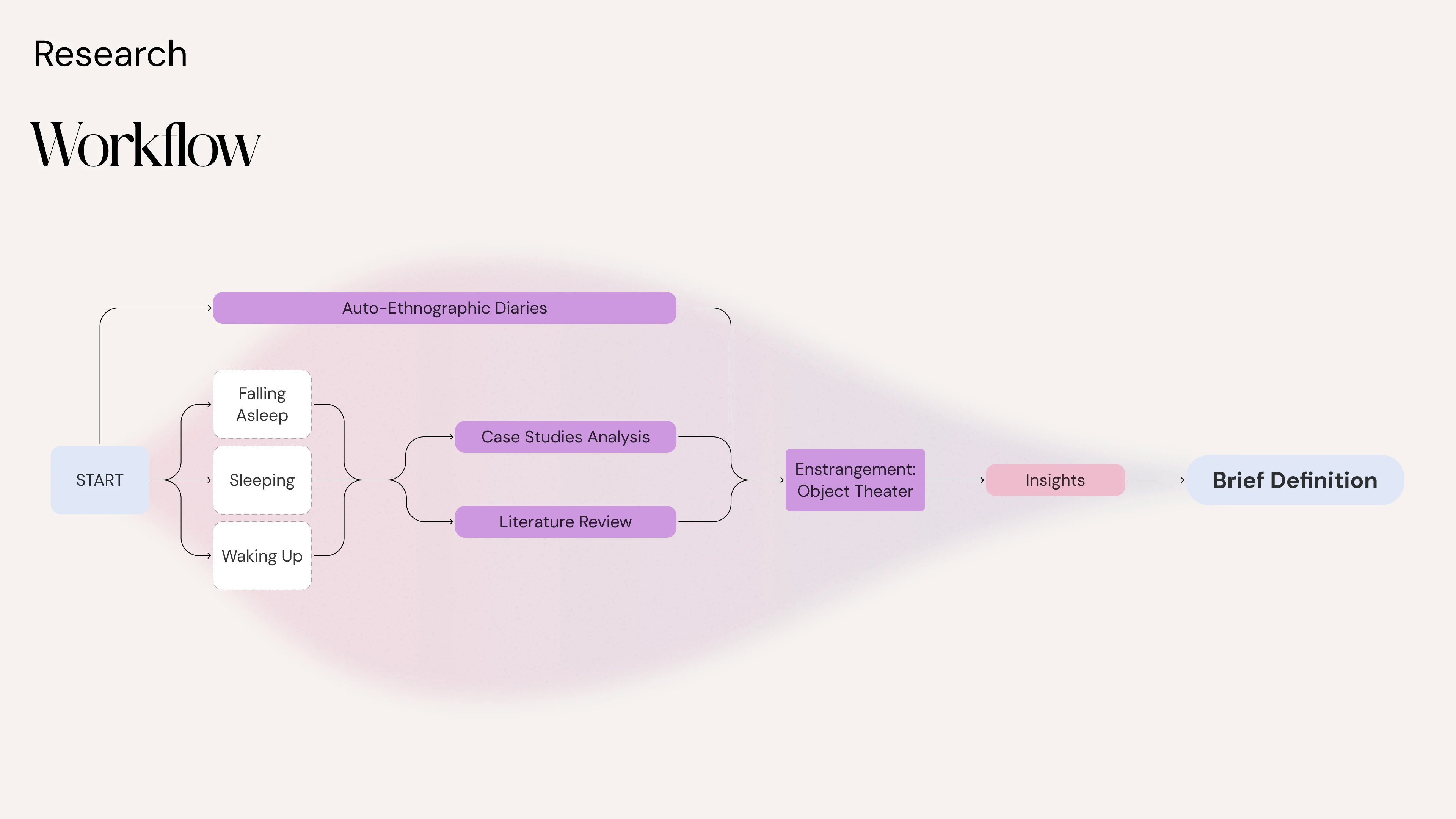
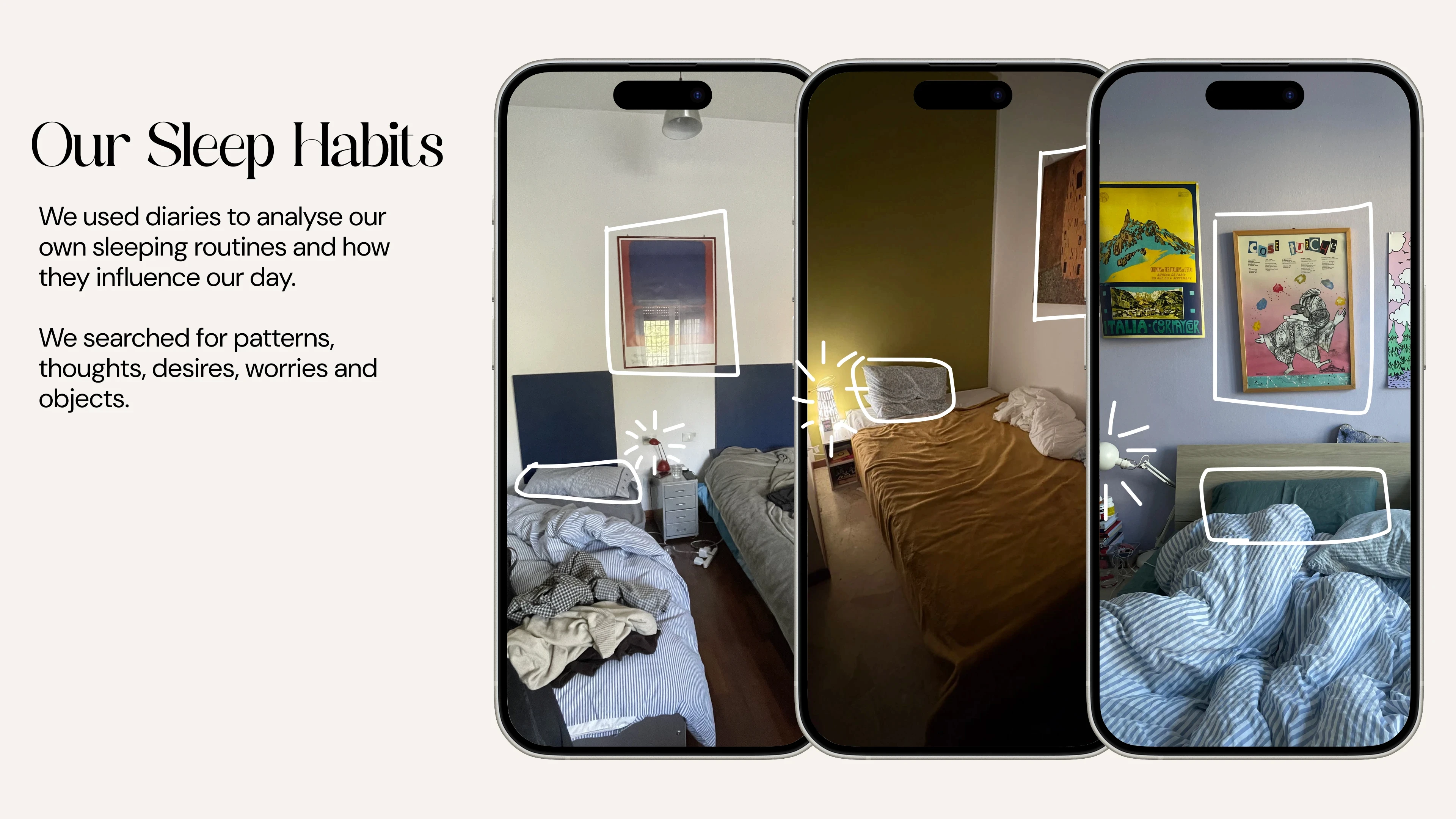
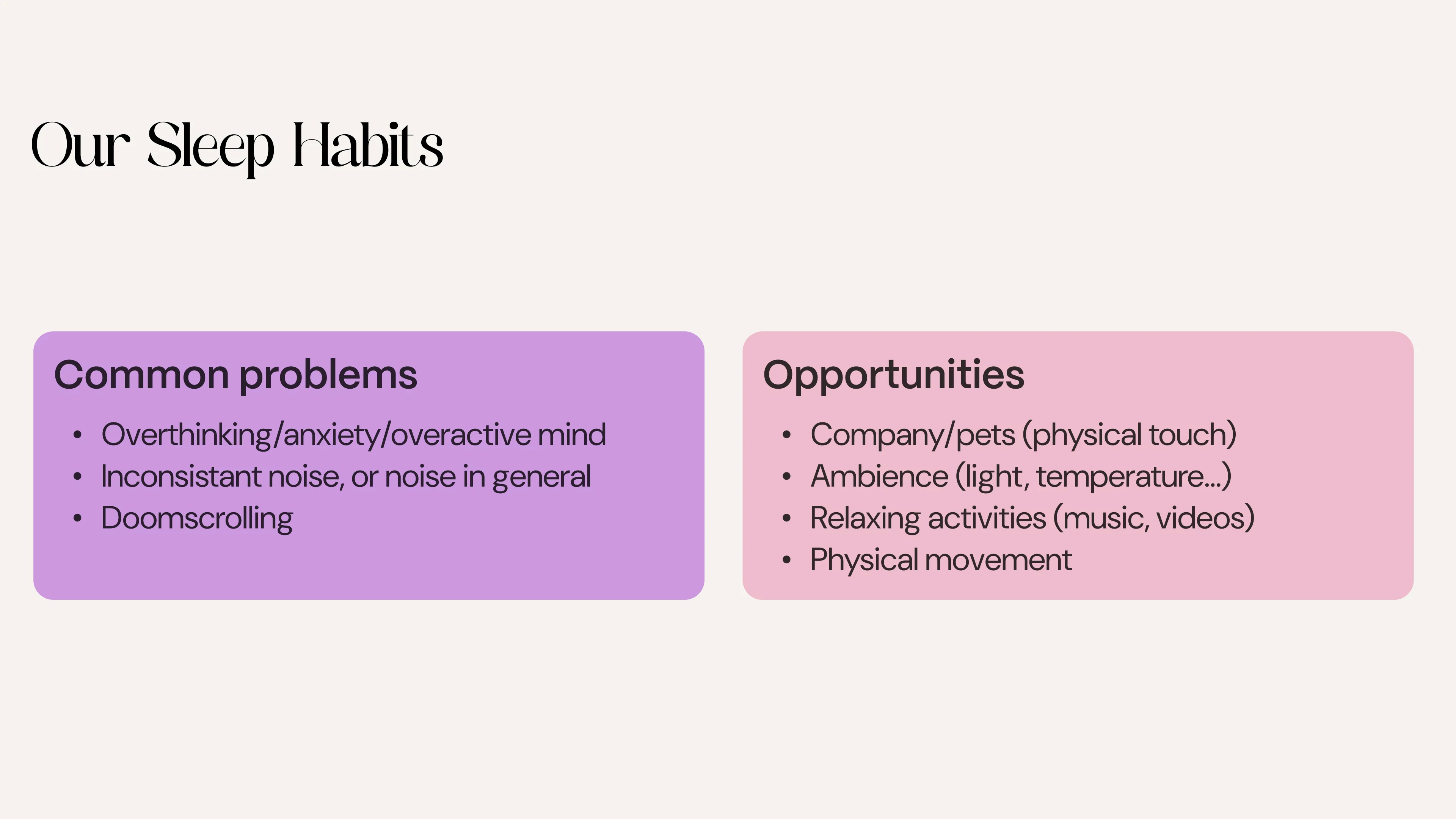
Auto-Ethnography & Diary Studies: Identified high shuteye latency (avg. 43 min) driven by overthinking, emotional isolation, and screen reliance.
Defamiliarization / Strangement: Contextualized pre-sleep routines in lab to map micro-movements, postural needs, and phone-separation triggers.
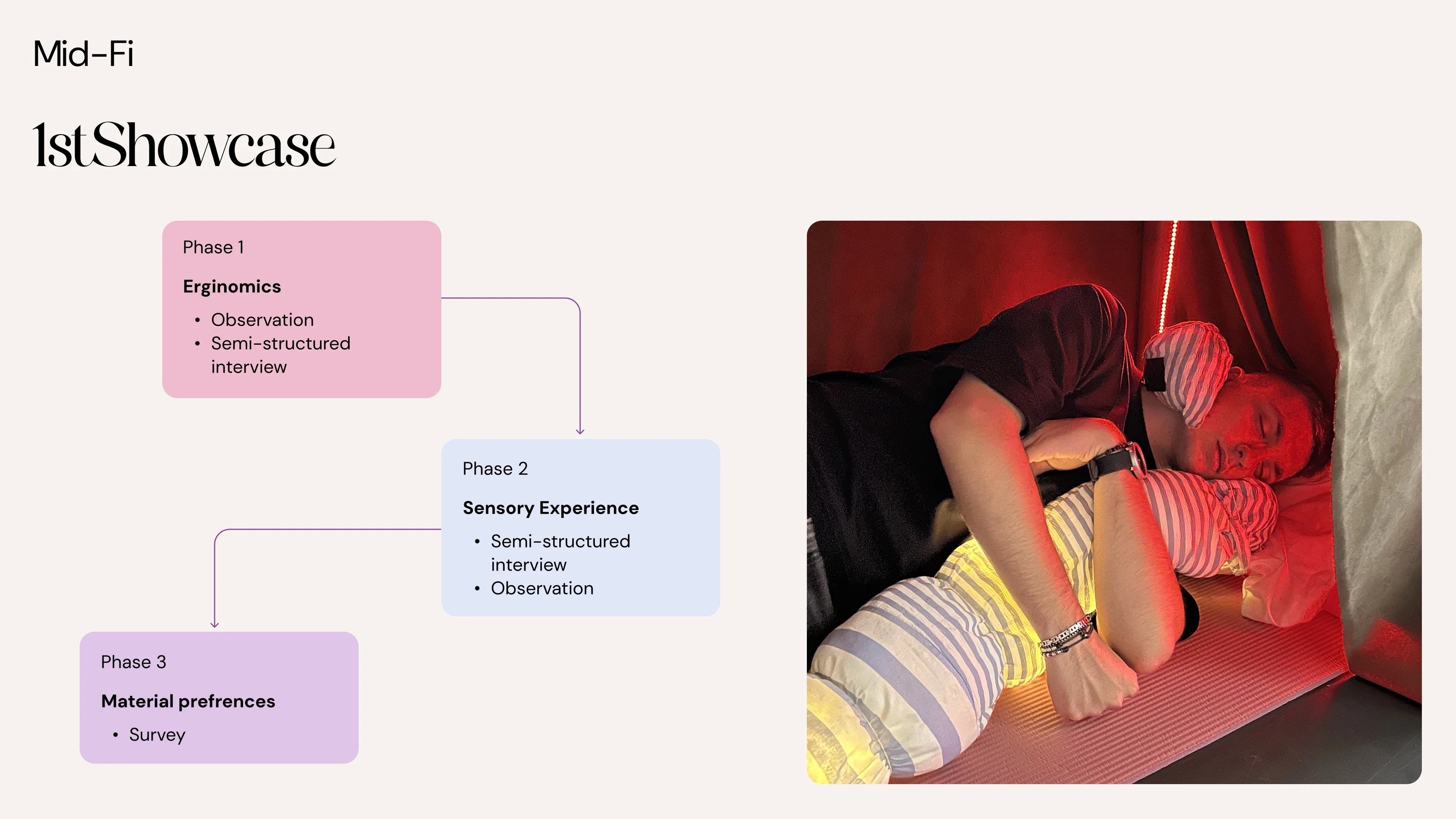
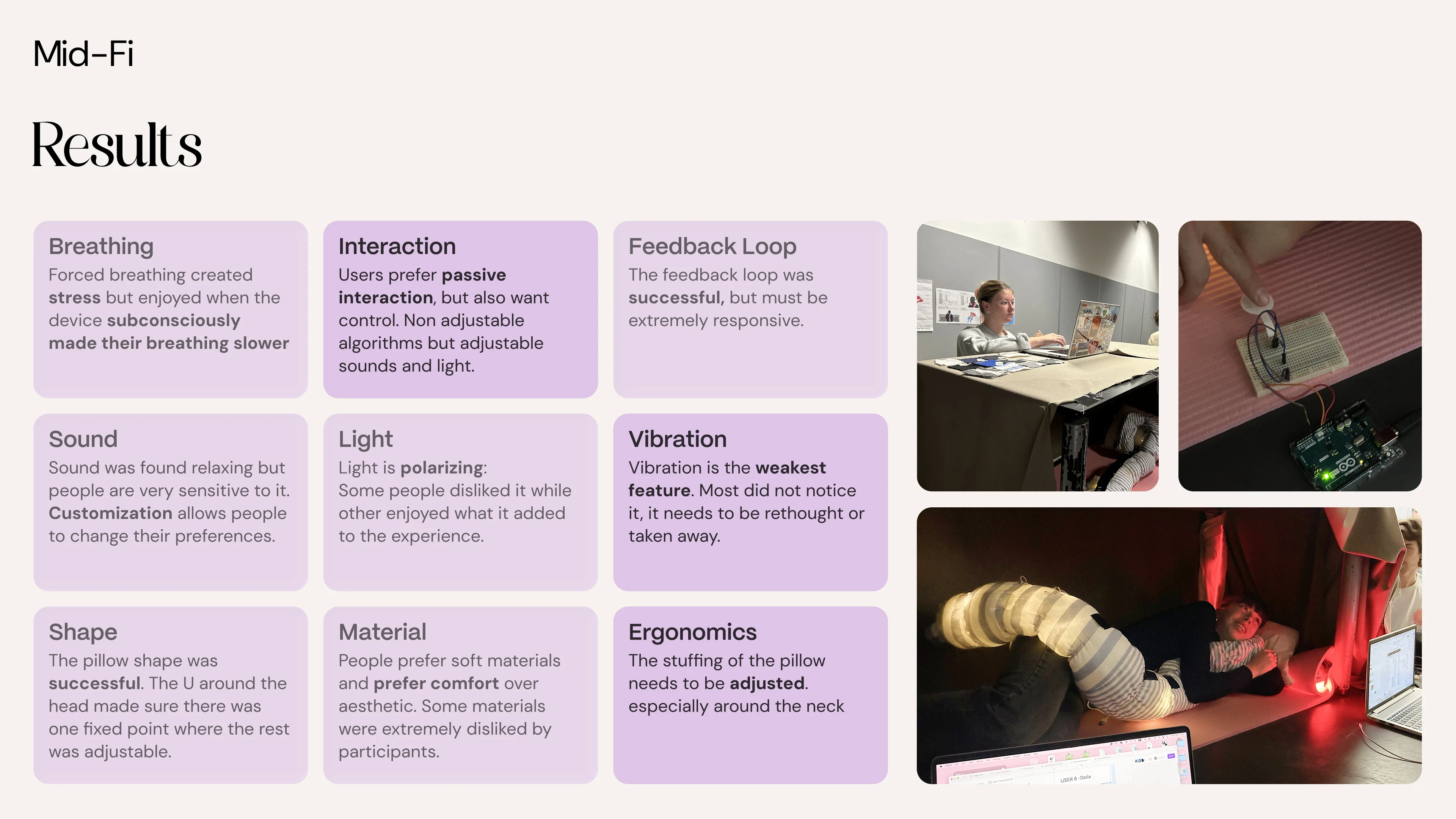
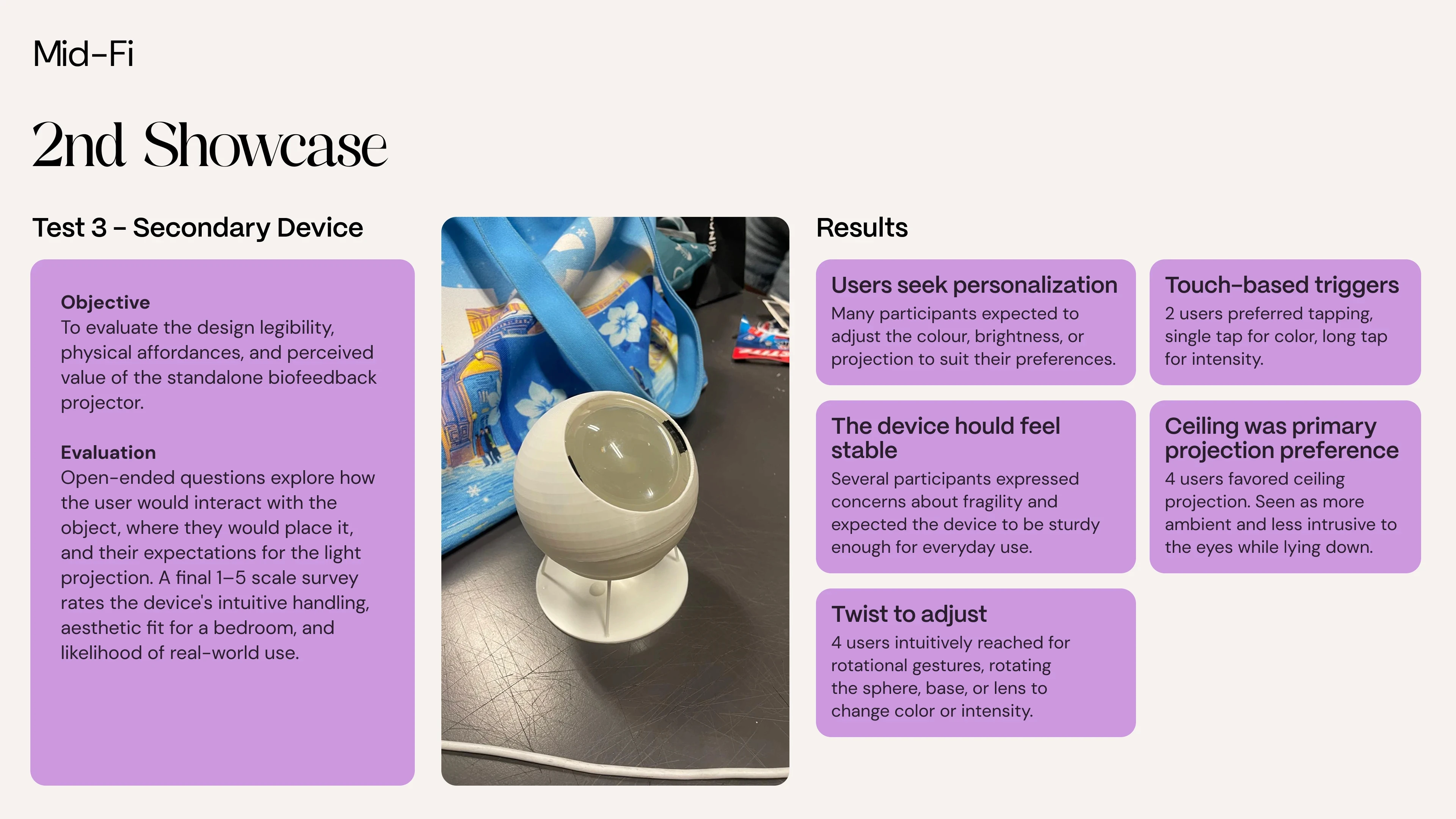
Polarizing Modalities: User testing revealed that exposed LEDs felt too intrusive and vibrations caused anxiety, whereas soft ceiling light projections and adaptive ambient audio successfully promoted relaxation.
Trade-offs & System Prioritization
Abandoning Integrated Vibration: Removed haptic motors from the pillow after testing showed users rarely felt them or found them jarring.
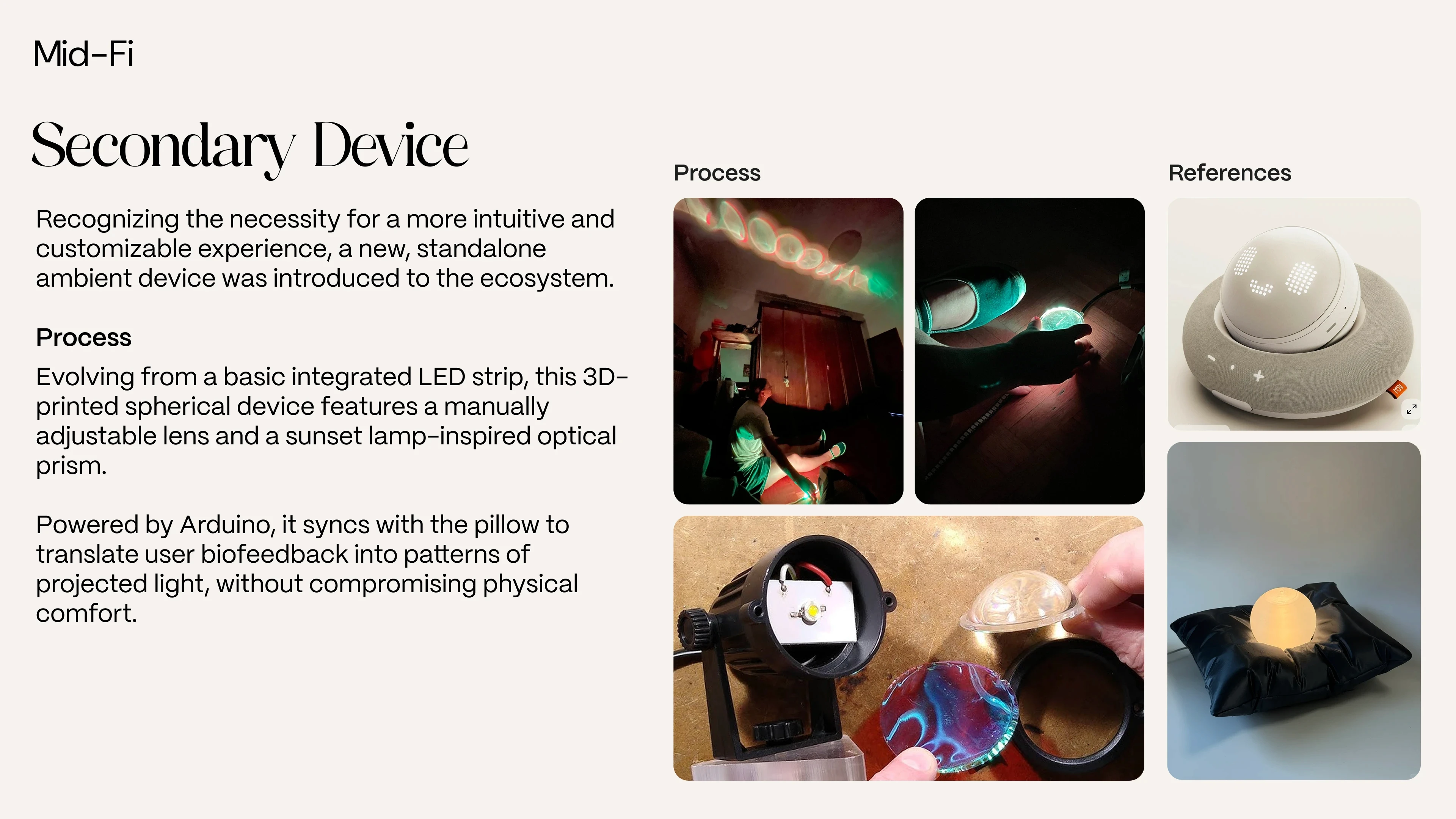
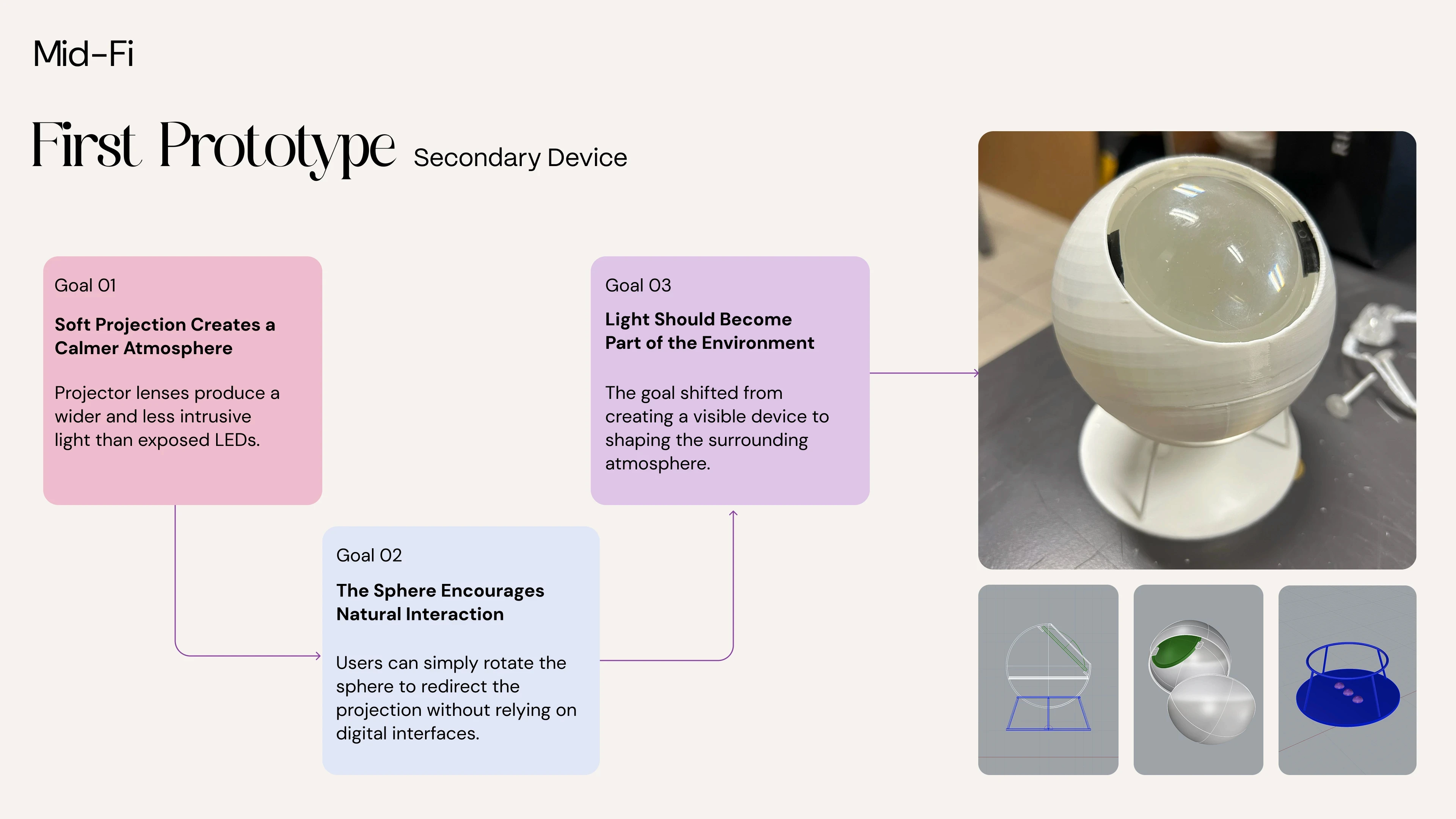
Removing On-Pillow Displays/LED Strips: Shifted light out of the pillow and into a dedicated secondary projector to prevent head discomfort and heat issues.
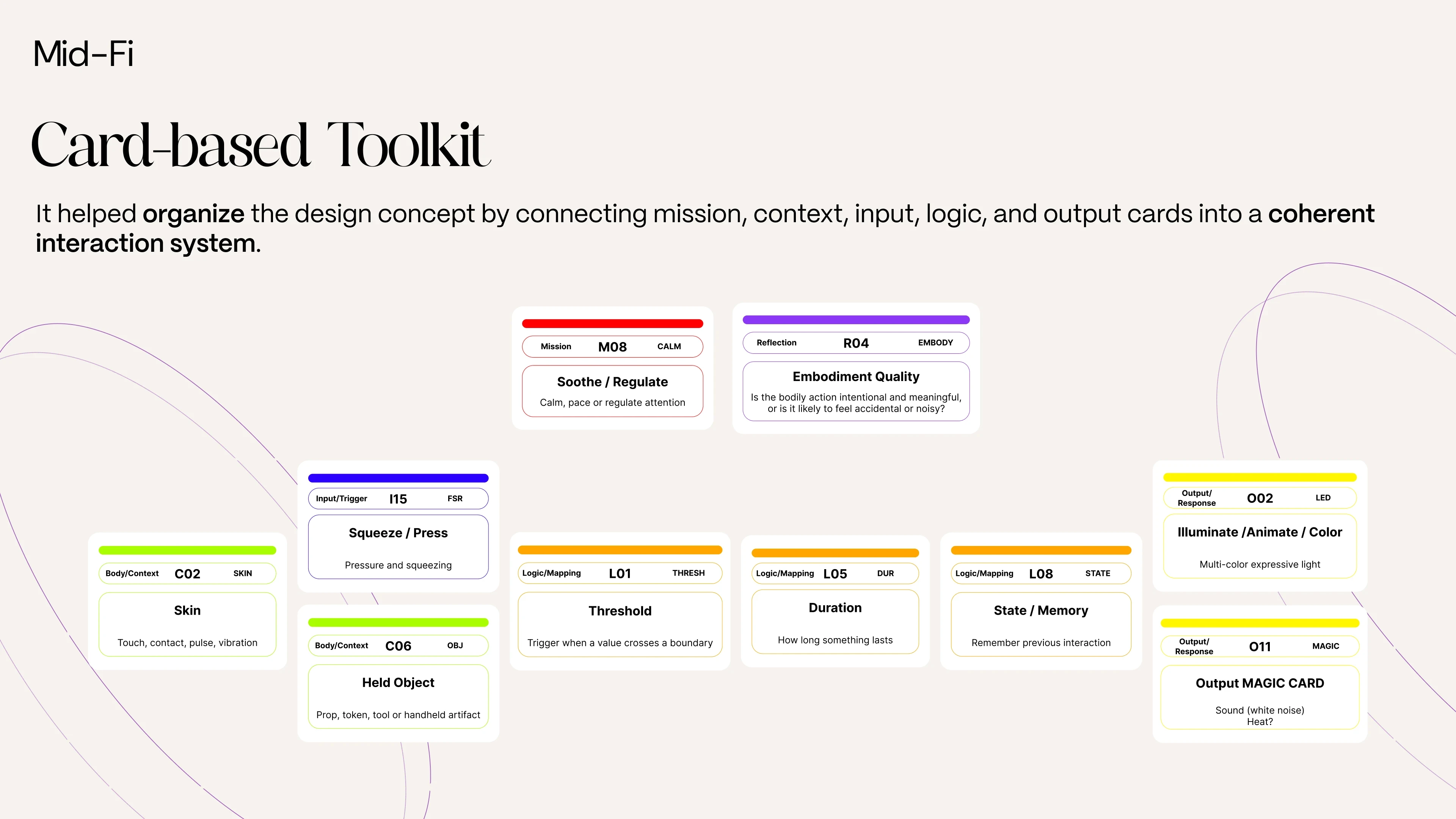
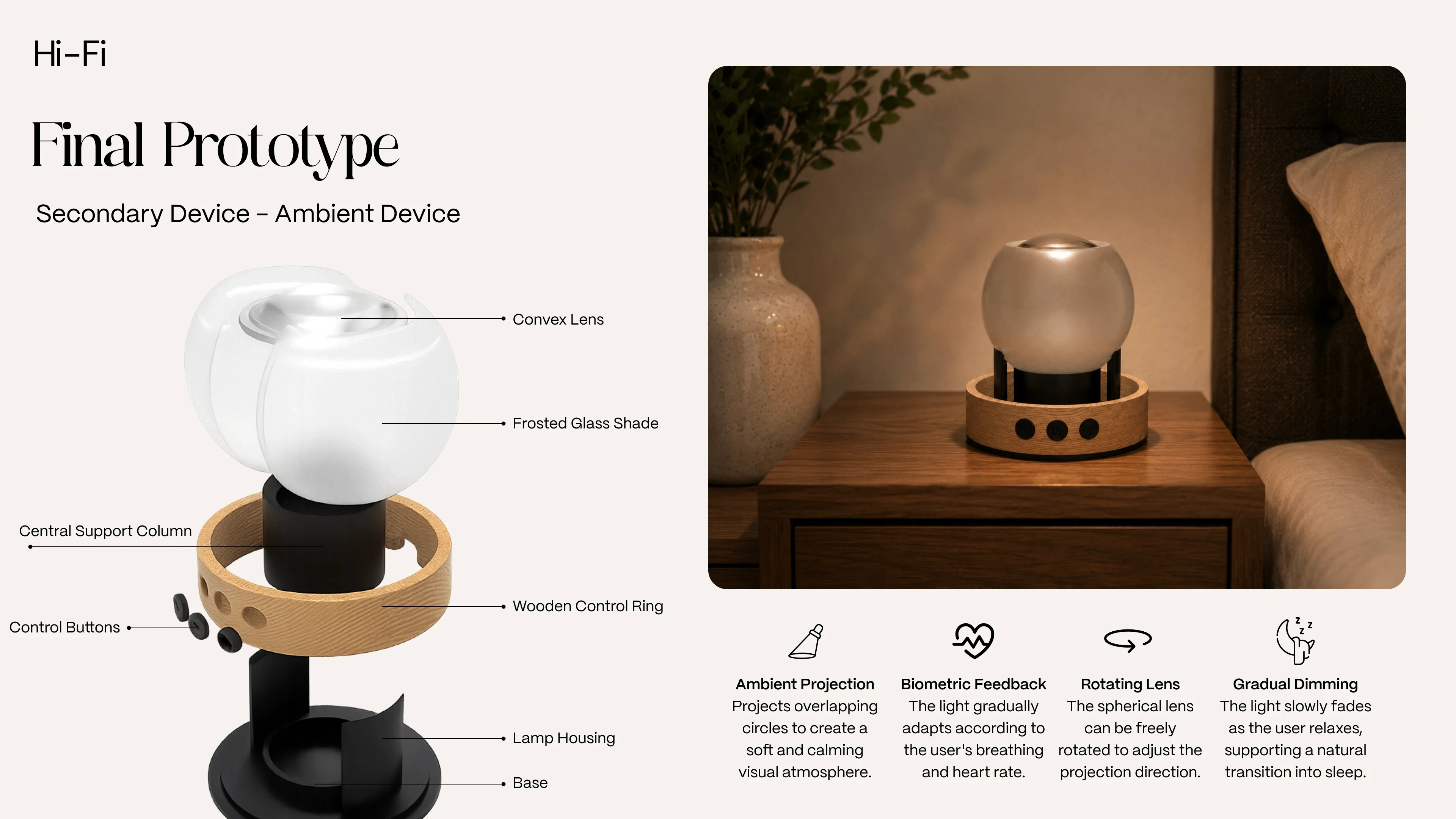
Physical Controls vs. Screen Apps: Opted for tactile, physical knobs (intensity, color, volume) and a rotatable lens on the lamp over a mobile companion app.
Iterative Ergonomics & Hardware-Software Testing
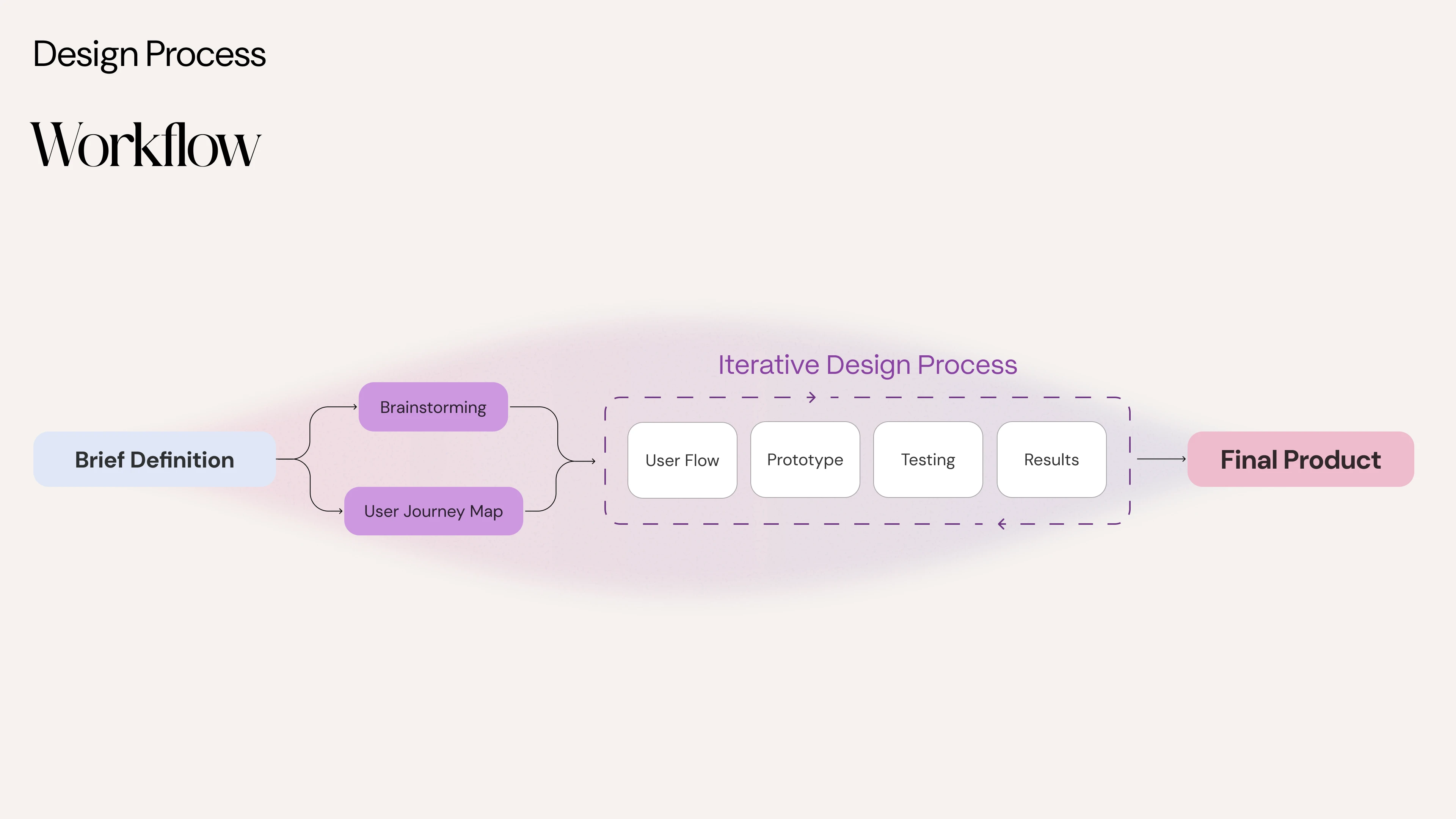
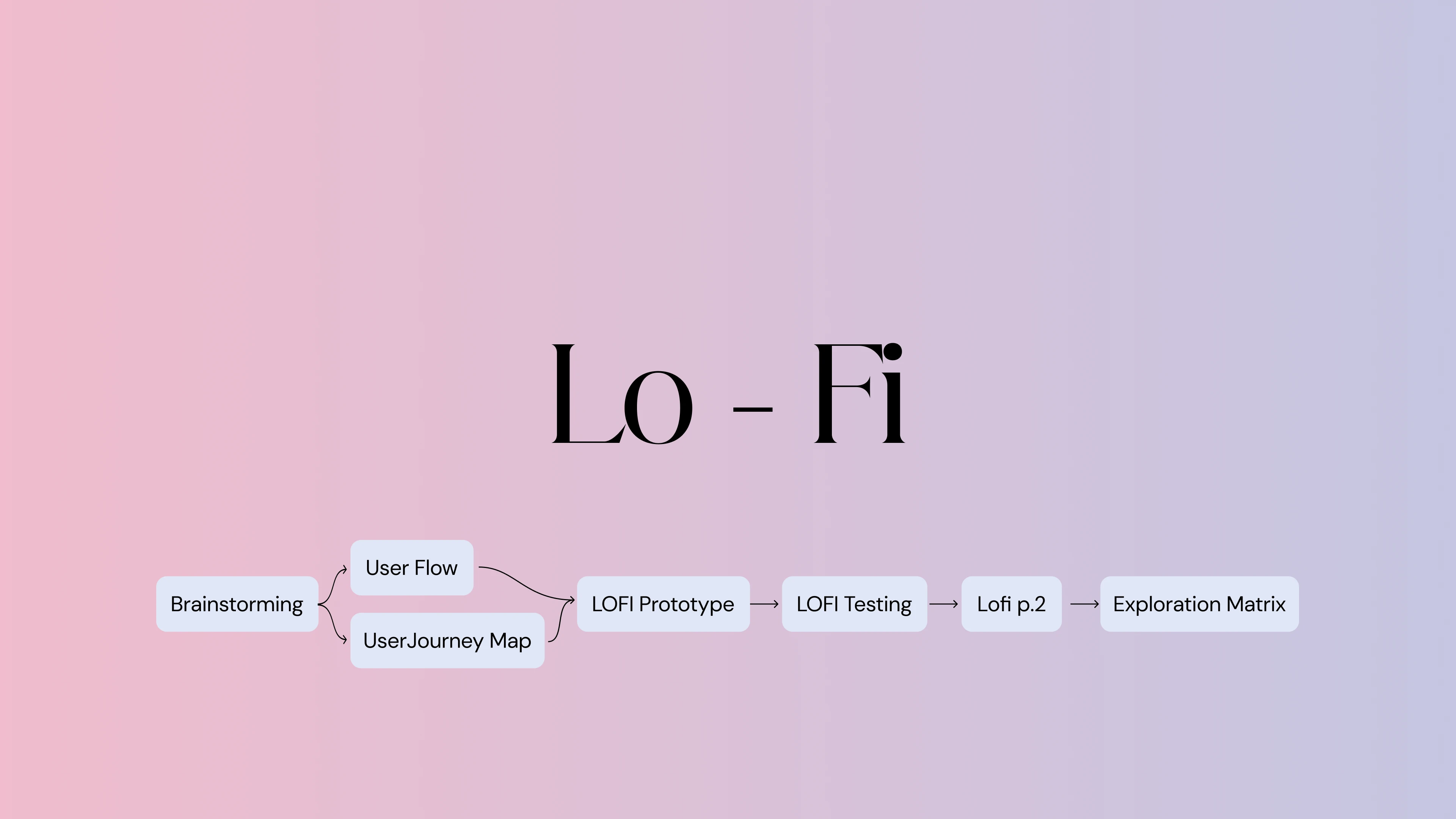
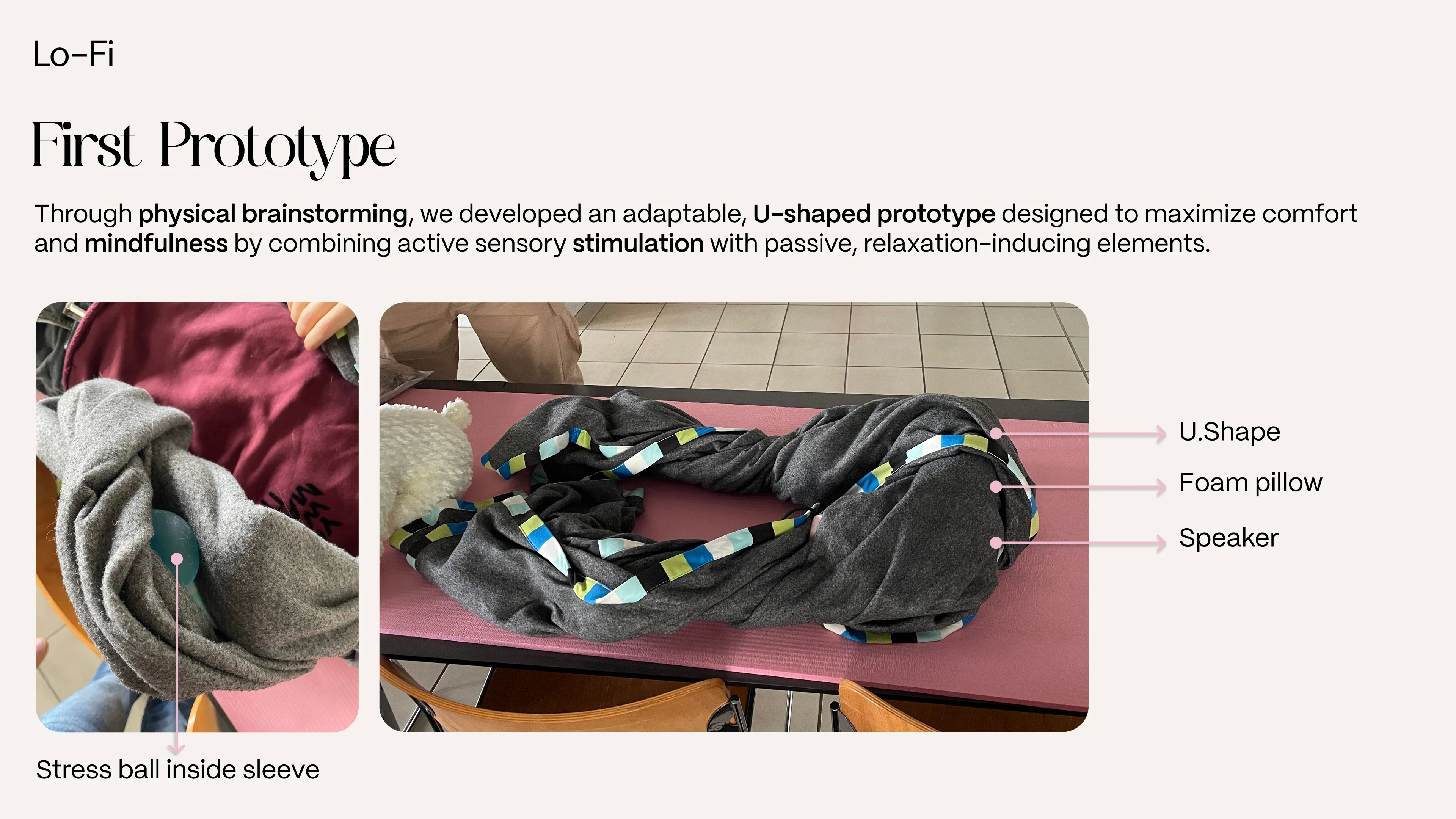
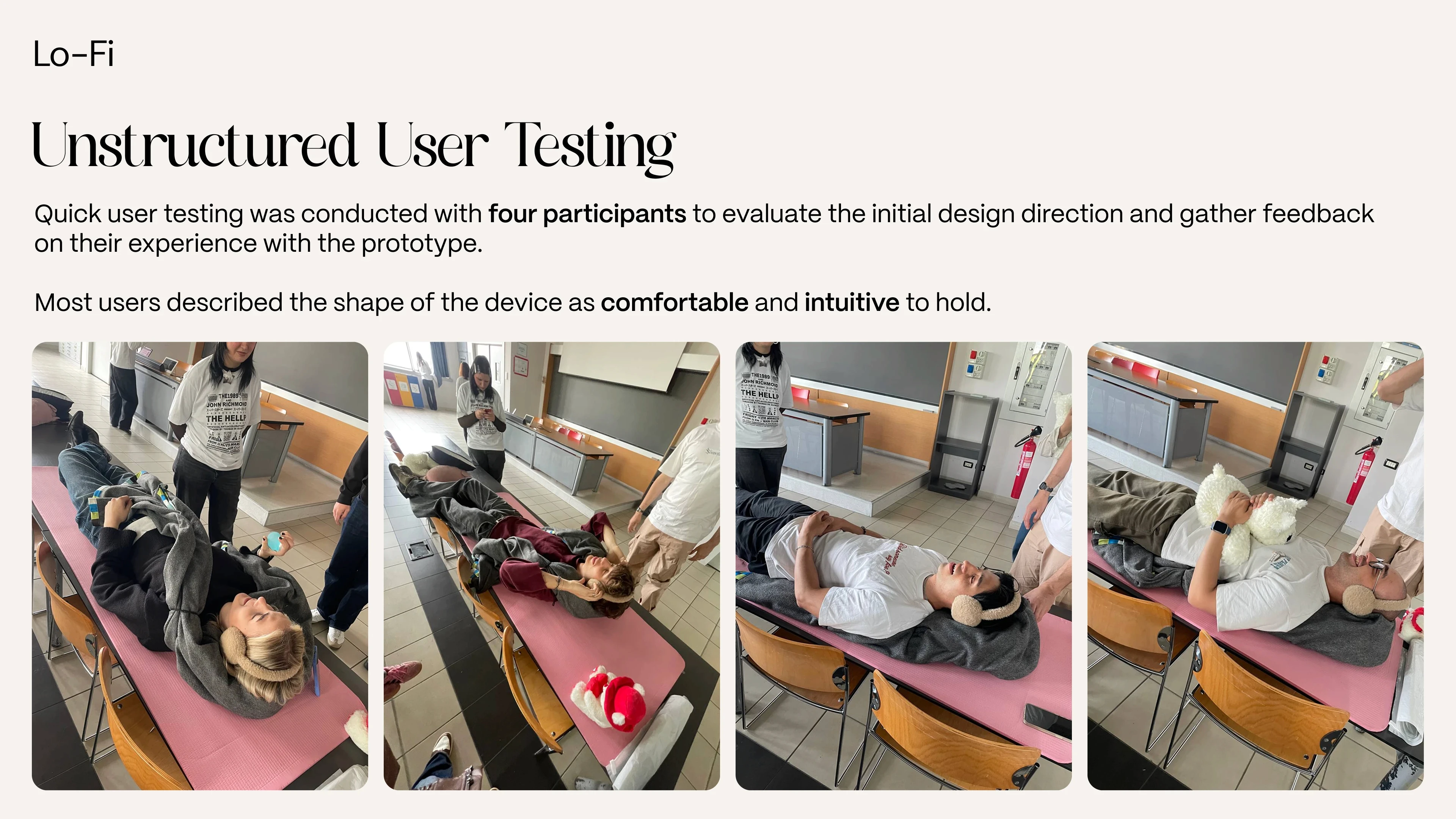
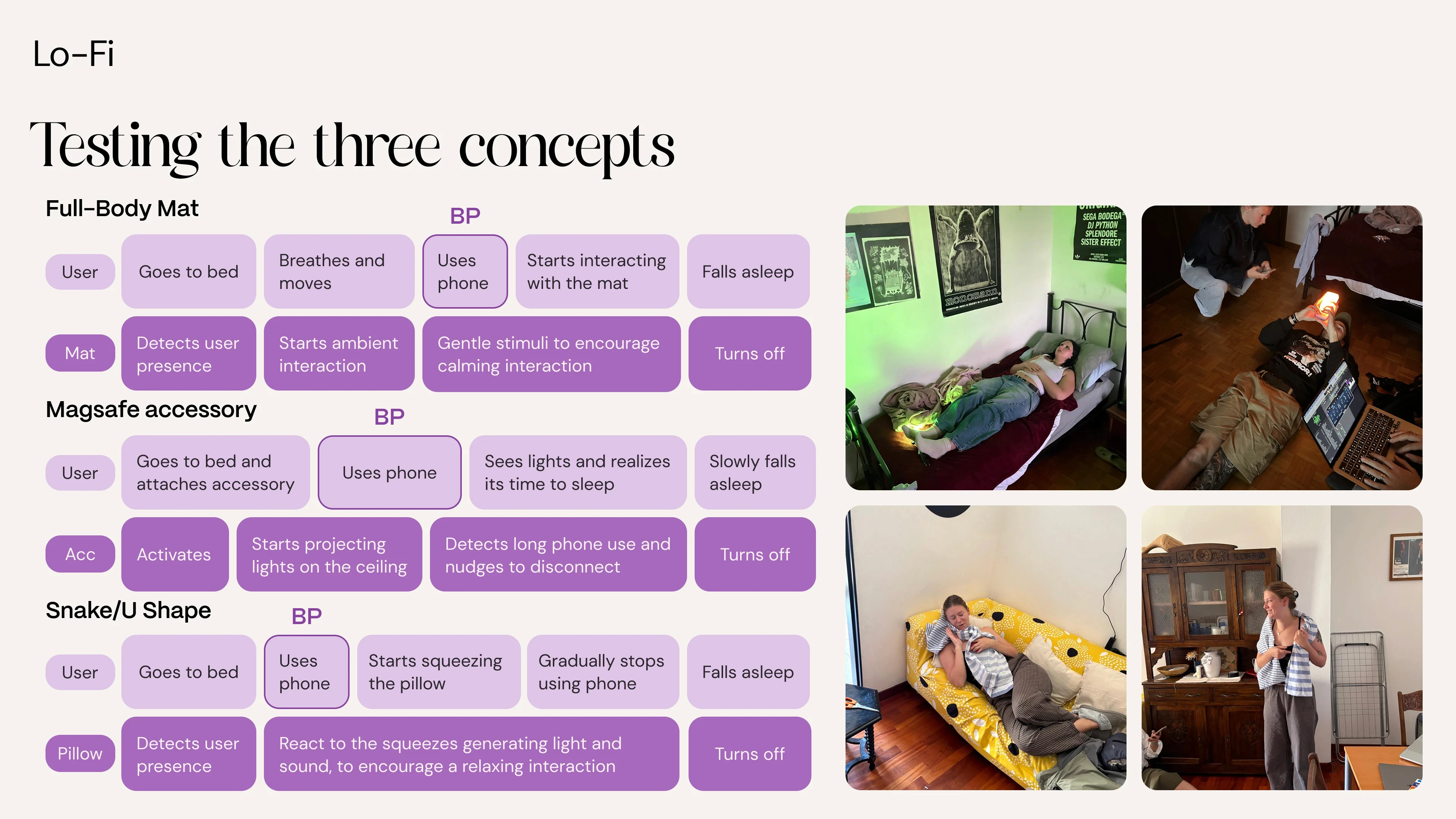
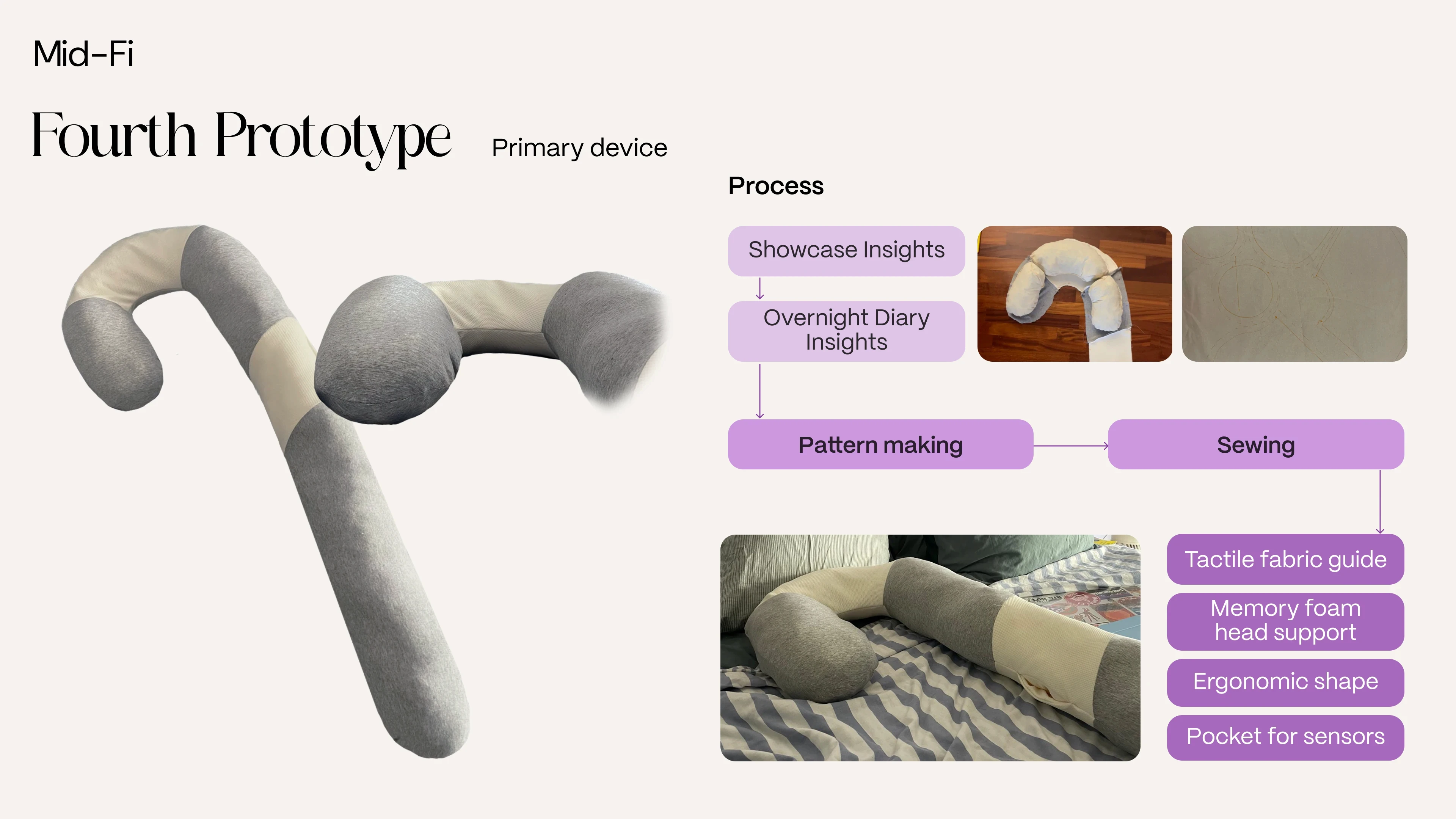
Lo-Fi Physical Exploration: Tested three core shapes (Full-body Mat, MagSafe Phone Accessory, U-Shape Snake Pillow) to discover that hugging an adaptable form best encouraged screen detachment.
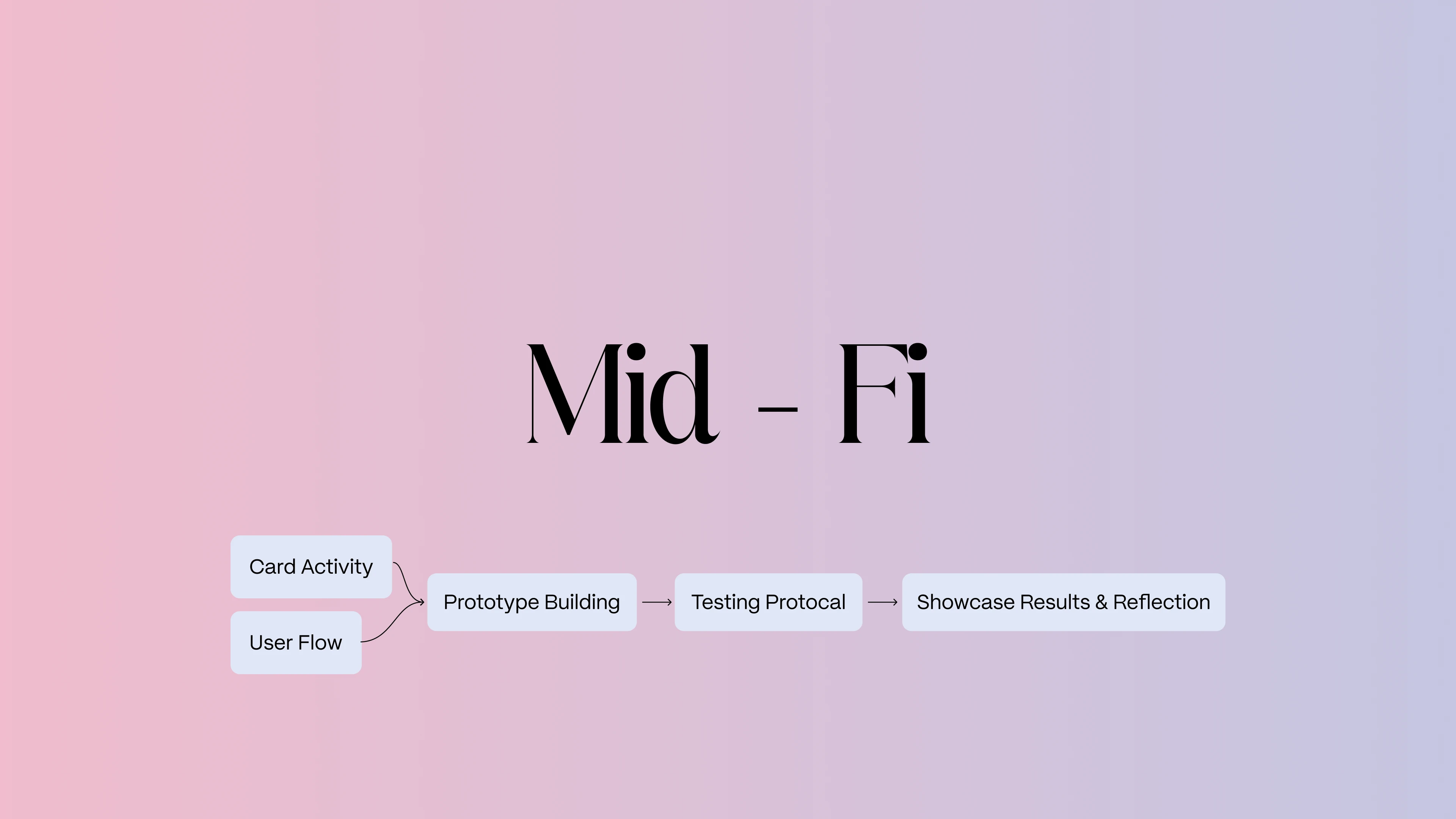
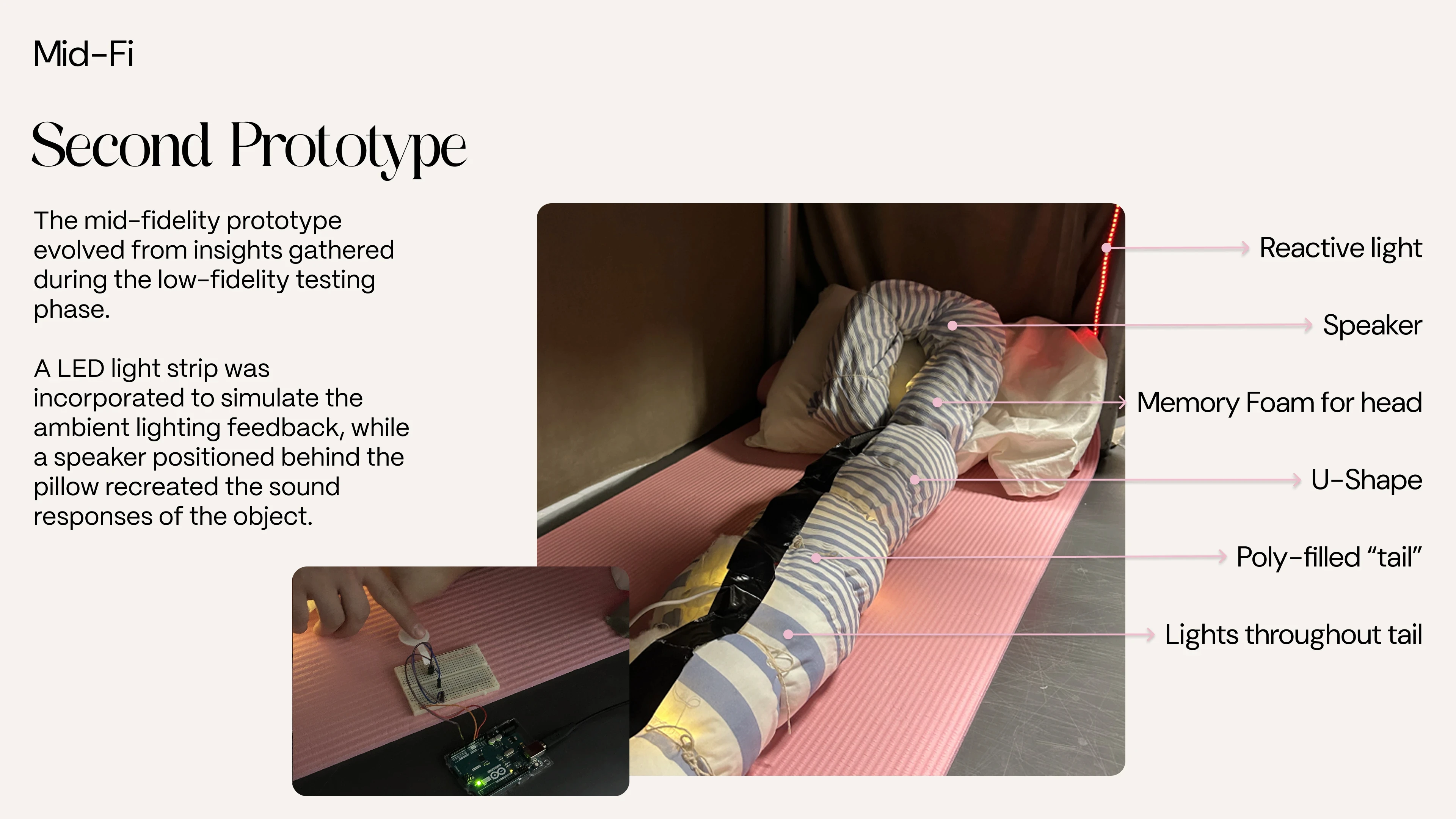
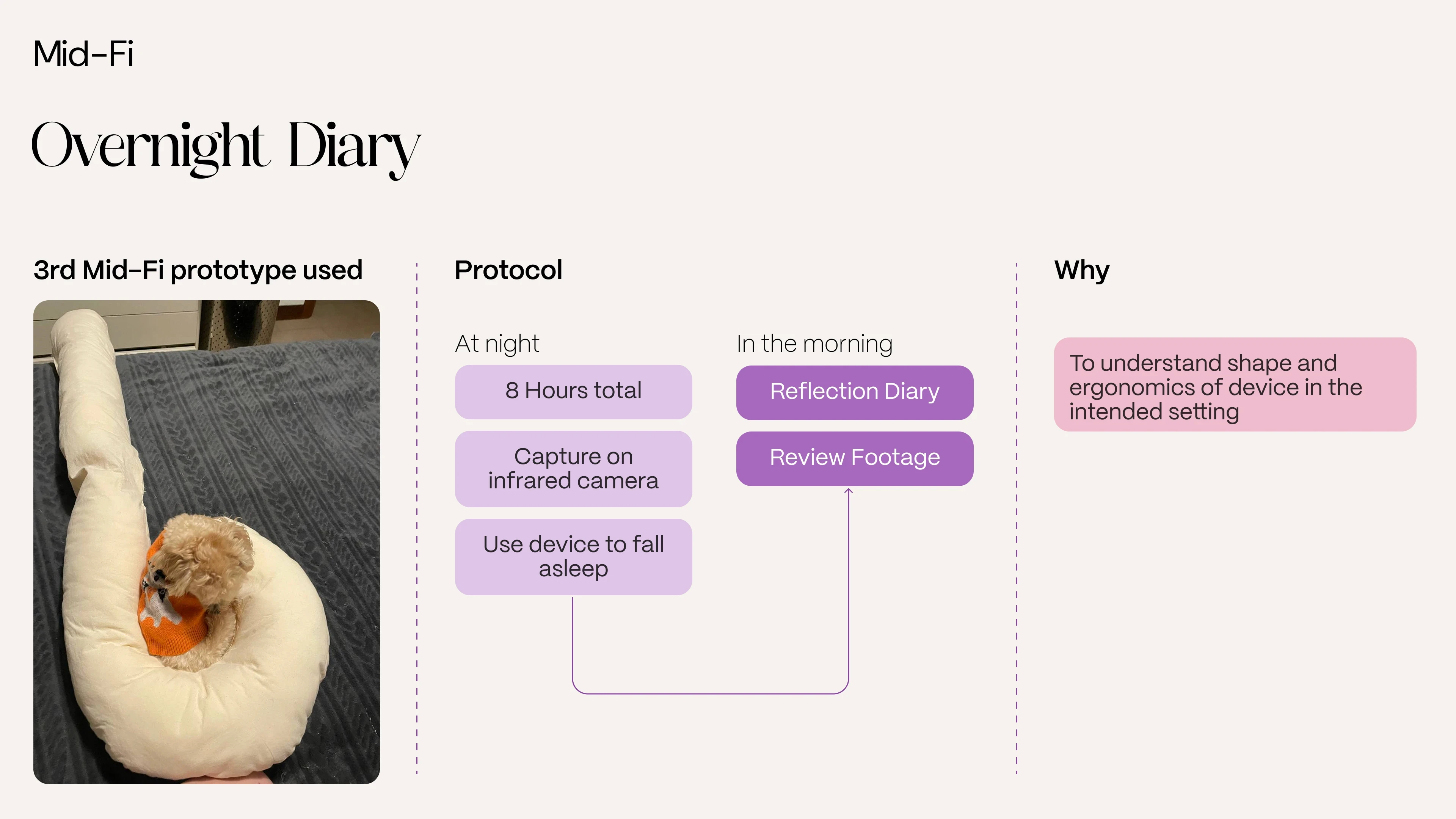
Mid-Fi Overnight Infrared Diaries: Used IR cameras and overnight testing to reveal neck tension issues, driving the switch to a dual-density memory foam/poly-fill architecture.
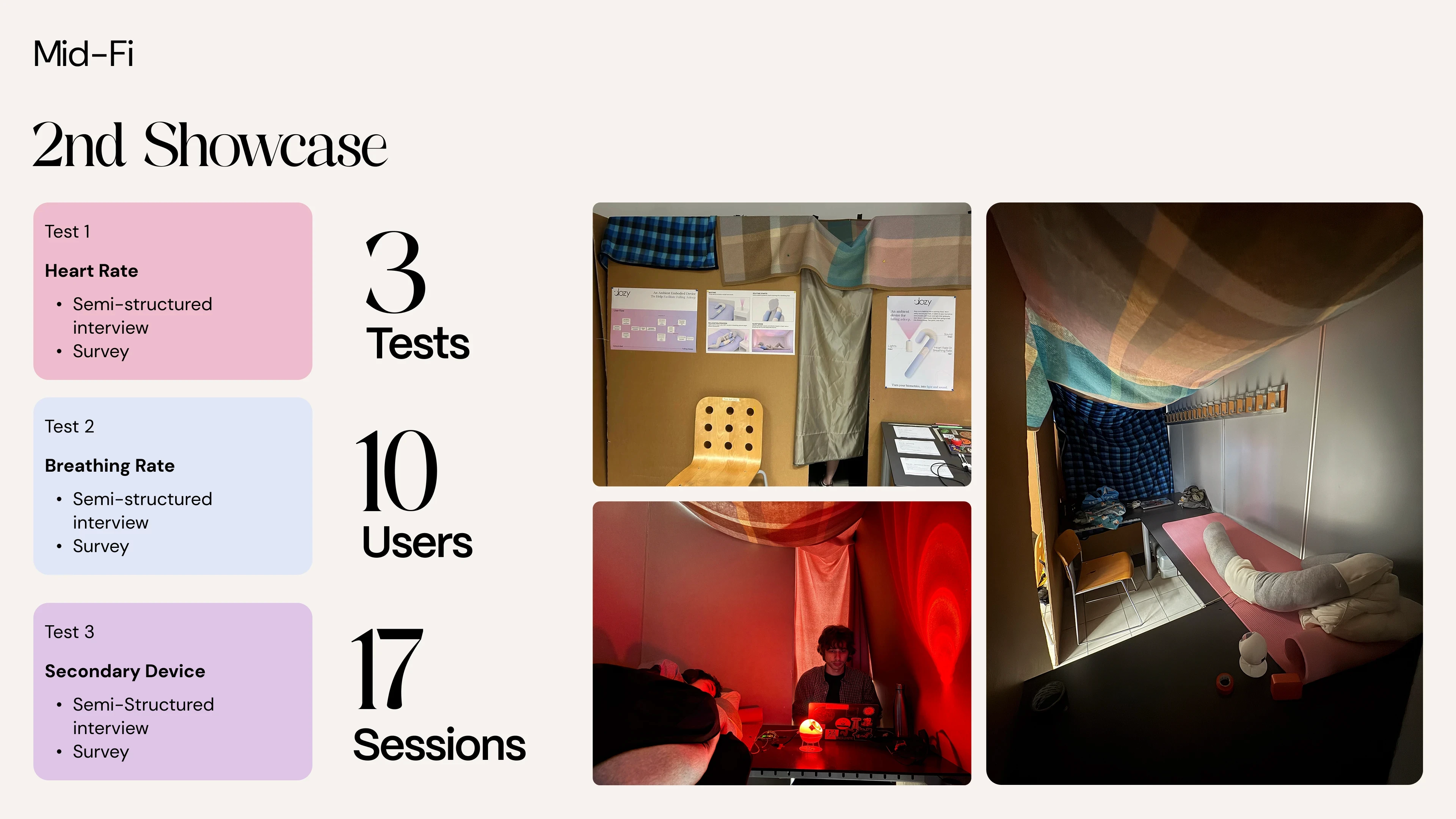
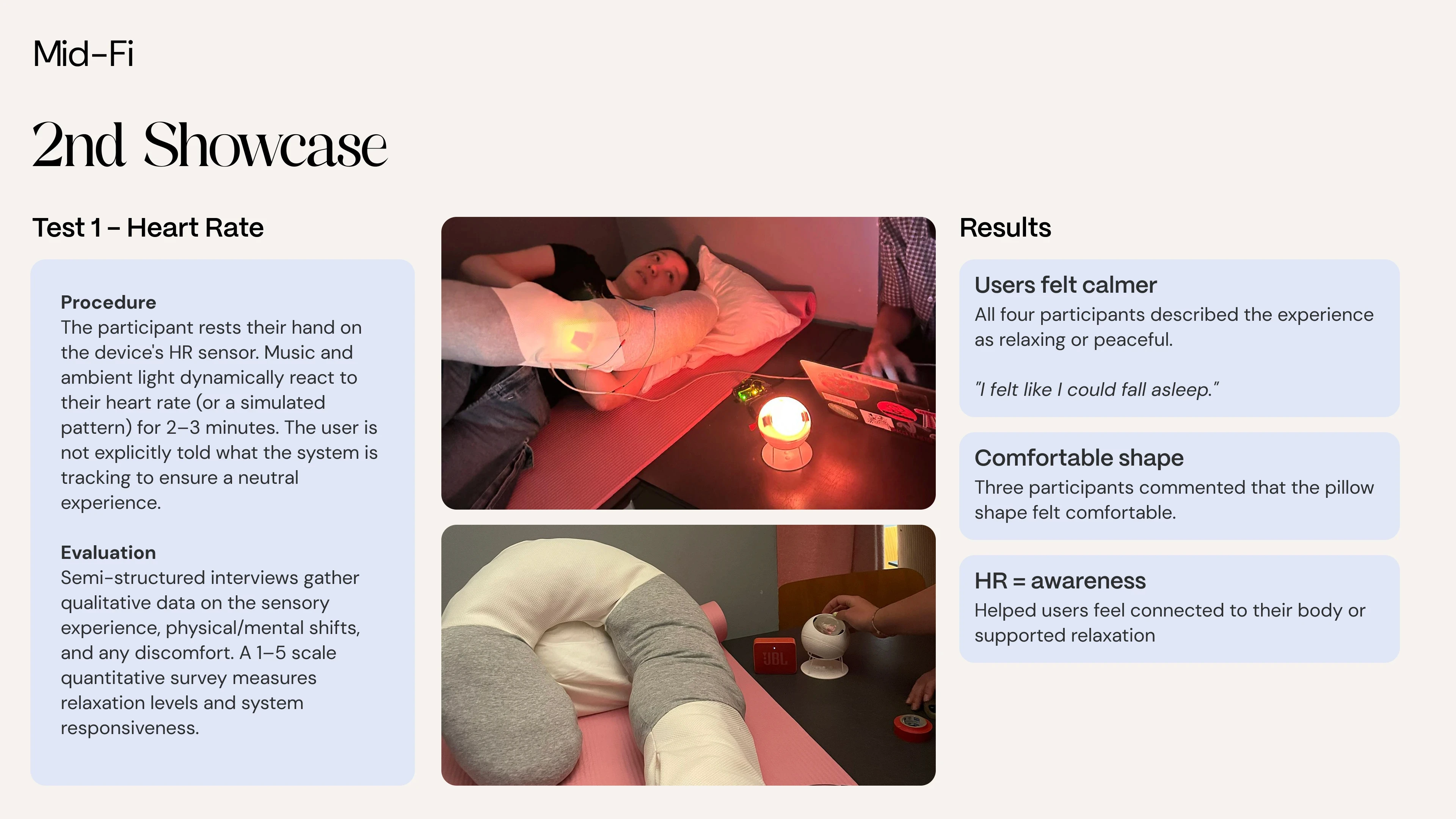
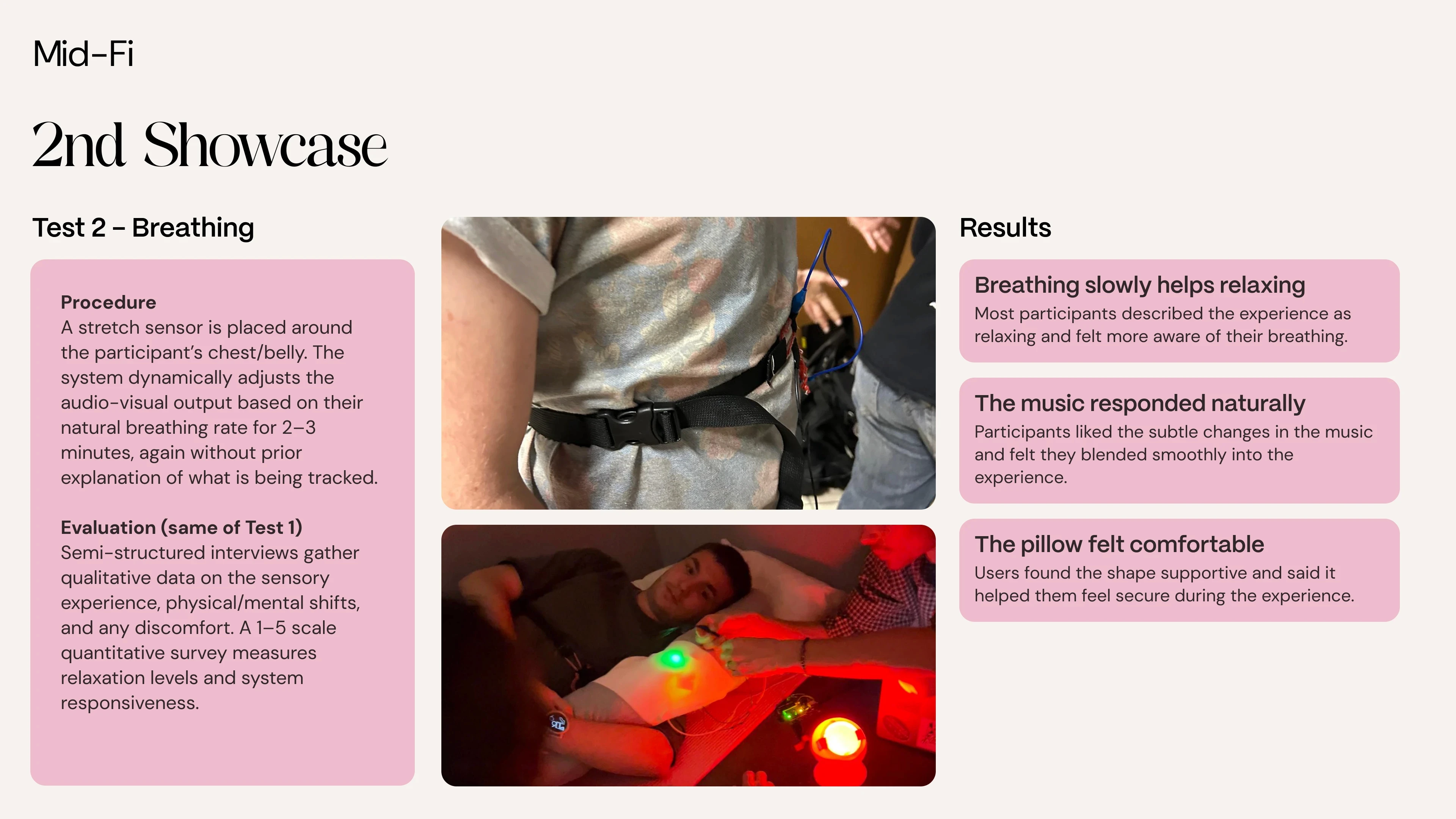
Wizard-of-Oz & Arduino Sensing: Simulated heart rate and stretch-sensor biofeedback loops across 17 user tests to refine dynamic lighting and audio-softening algorithms.
Results & Deliverables
Hi-Fi Integrated System Prototype: Functional dual-device prototype ("Dozy") featuring an ergonomic sensor-embedded hug pillow and a 3D-printed biofeedback projector lamp.
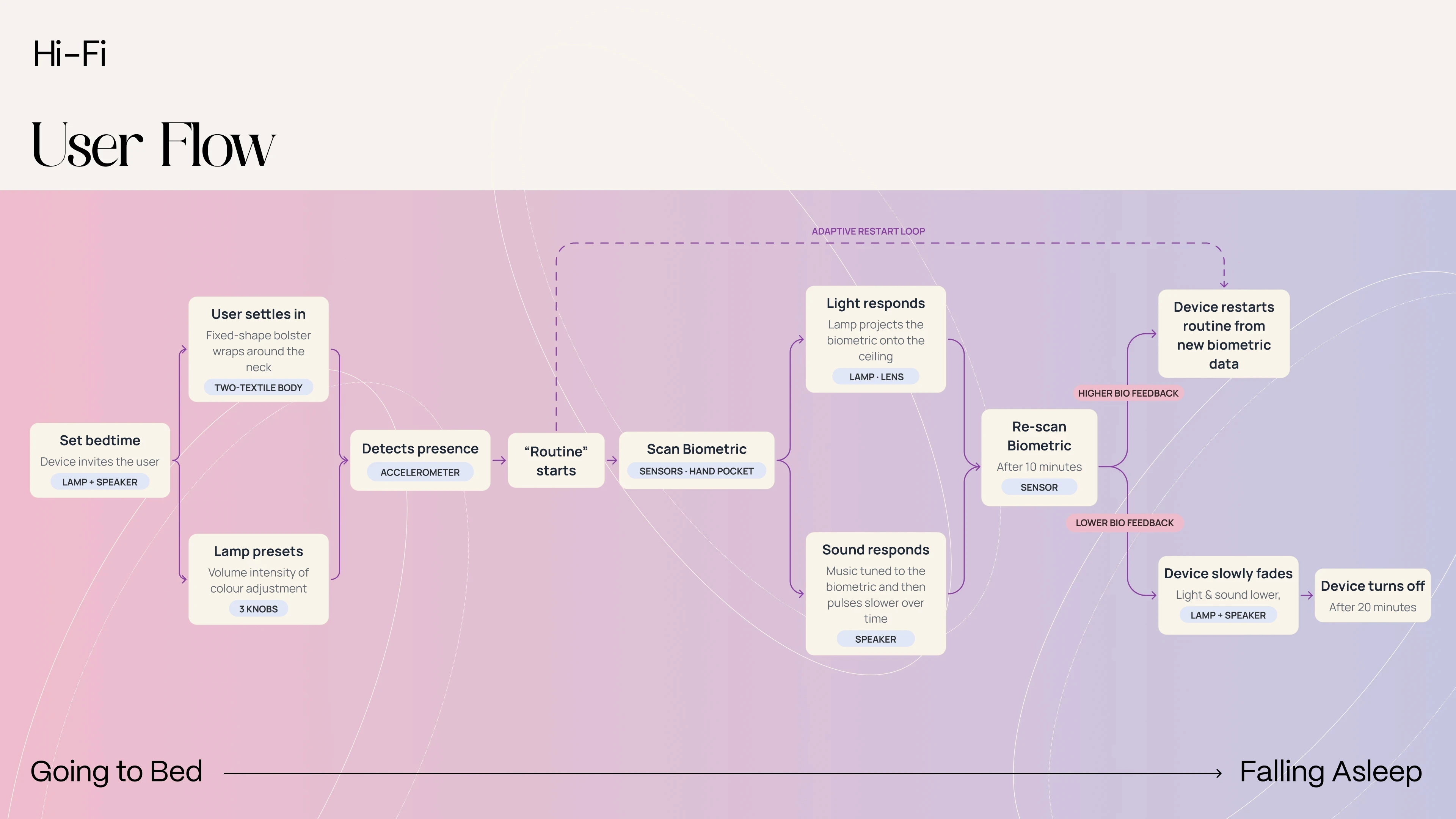
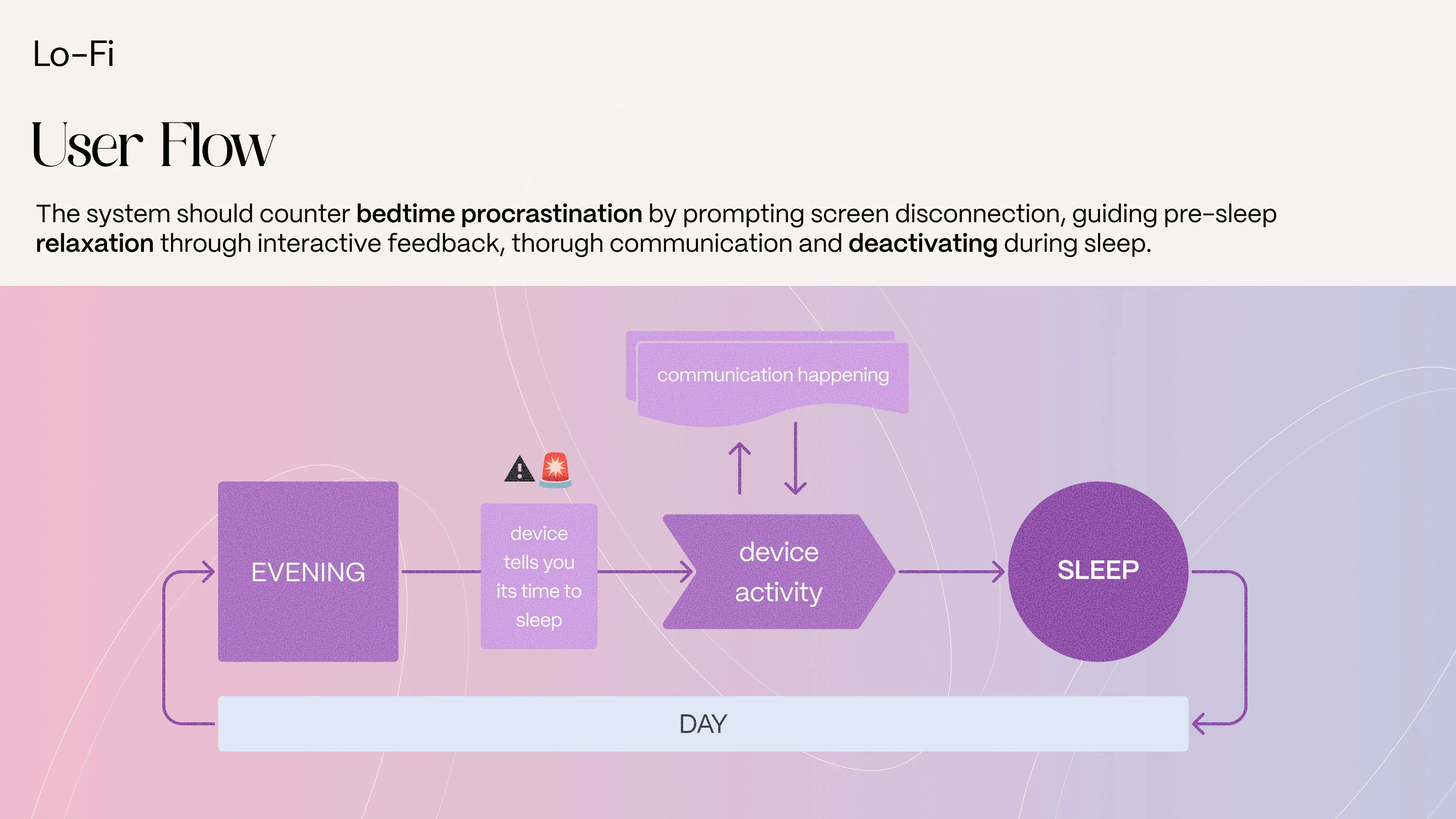
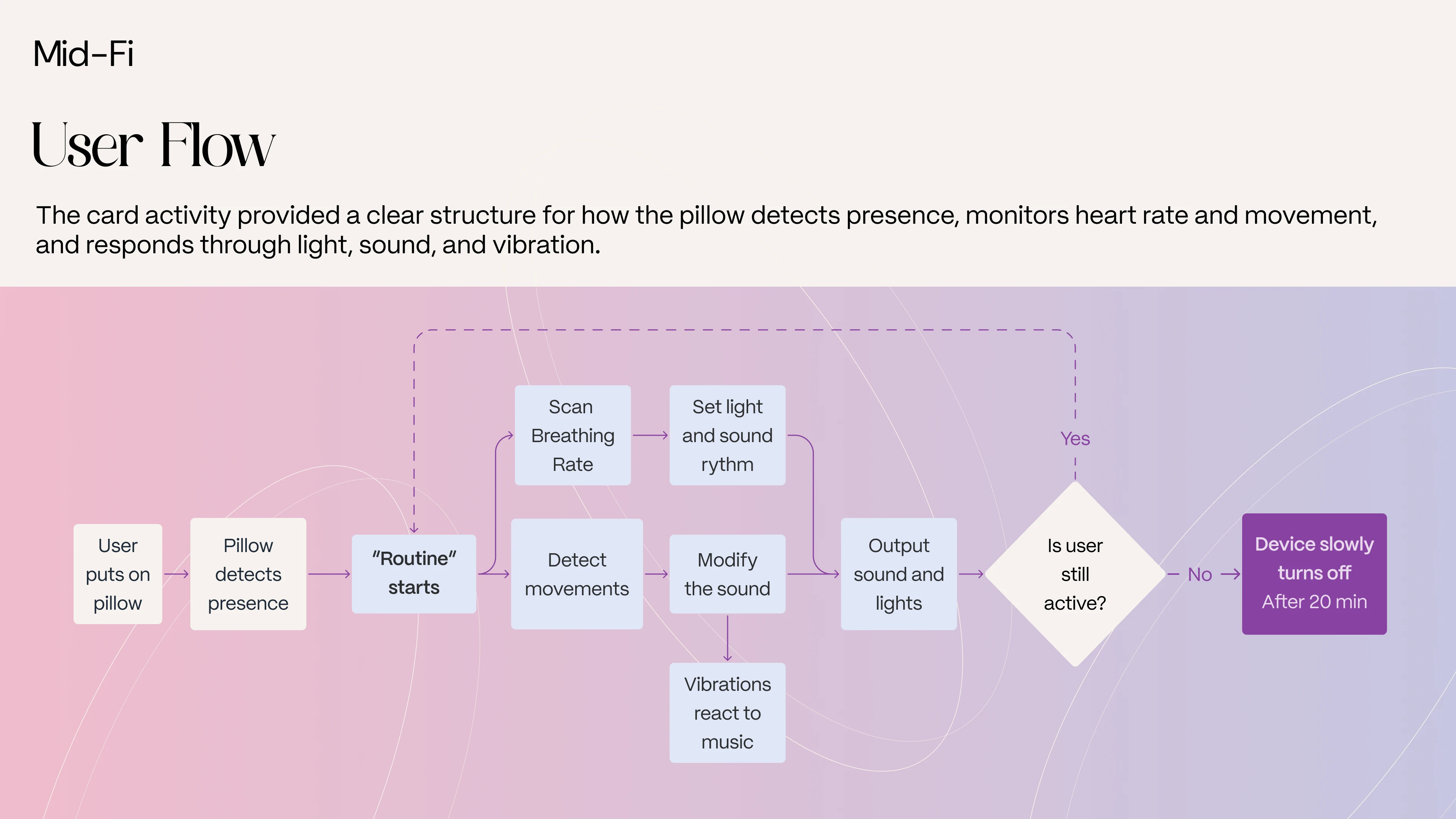
End-to-End Interaction Framework: Mapped complete screenless user flows, bedtime invitation states, 20-minute auto-fade loops, and biometric re-scan cycles.
Collaborative Team Role Summary
Collaborated on end-to-end UX strategy, user research protocols, and interaction mapping within a multidisciplinary team.
Co-designed physical prototyping workflows, bridging Arduino-based hardware sensing with soft textile integration.
Facilitated iterative testing loops, translating qualitative user feedback into systemic product trade-offs and final product refinements.



Dozy
Dozy is a screenless, two-part biofeedback ecosystem designed to combat bedtime procrastination and reduce nighttime anxiety in young adults. By pairing a tactile, multi-density companion pillow with an ambient light and sound projector, the system captures biometric cues and subtly guides users into sleep through gentle sensory entrainment. The project replaces screen reliance and mobile app interactions with a purely physical, intuitive experience—combining soft ergonomics, tangible UX, and physical computing to create a seamless pre-sleep transition ritual.
The Challenge
Overcoming shuteye latency, overthinking, and bedtime procrastination in young adults seeking digital detox, without relying on intrusive screens or complex app interactions.
The Solution
"Dozy"—a screenless, two-device ecosystem combining a tactile, multi-density companion pillow with an ambient biofeedback lamp that mirrors heart rate and breathing through dynamic light and sound.
3 Big Takeaways
Subtle over Explicit: Users prefer passive, subconscious entrainment (e.g., light and audio slowing down to guide breathing) over forced or explicit instructions.
Comfort Trumps Technology: In bedtime physical computing, soft ergonomics, fabric choices, and unobtrusive forms matter far more than complex visual tech.
Decoupling Sensing from Feedback: Separating the physical huggable pillow (sensing/comfort) from the light projector (ambient environment) solved ergonomic issues caused by integrated hardware.
Year
2026
Client
Politecnico di Milano
Duration
User Testing, UX Research, Prototyping, Communication Design
Role
Product Designer & UX Researcher
Scope
Embodied Interaction, Sleep Tech, IoT Ecosystem, Physical Computing, Tangible UX, Speculative & Biofeedback Design, Screenless UX
Impact
Reduced bedtime procrastination and nighttime anxiety by transitioning young adults into sleep via an ambient, screenless two-device biofeedback ecosystem.